Exhibiting in China: behind the scenes of a world in transition
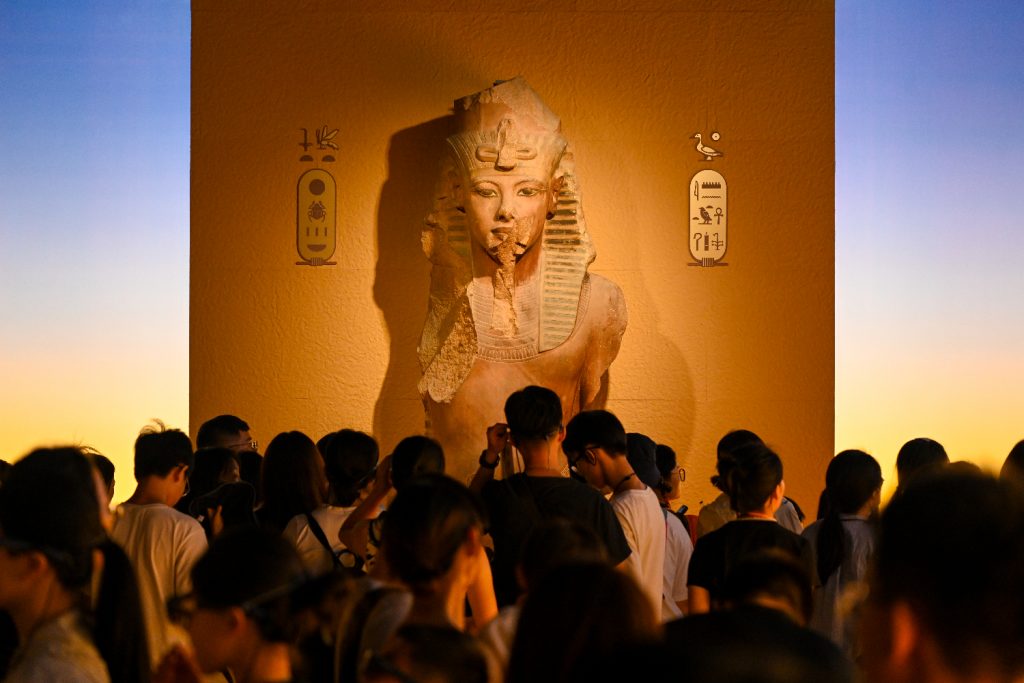
Exhibition view of The Civilization of Ancient Egypt: On Top of the Pyramid, Shanghai Museum, 2025.
Between millennial heritage and contemporary art, the museum scene and exhibition market in China are undergoing profound changes. With more than 7,000 museums in 2025, the country is confirming the central role of culture in its domestic recovery strategy. After a decade marked by the emergence of major museum institutions and structuring international partnerships—from the Centre Pompidou to the West Bund in Shanghai, the Design Society in Shenzhen in collaboration with the Victoria & Albert Museum, and the Tate with the Pudong Art Museum—the museum landscape is entering a phase of post-Covid maturity amid economic uncertainty.
Text: Doors
In this cultural landscape, two complementary worlds coexist, answering and stimulating each other. On one hand, public museums — true engines for heritage dissemination and tourism — highlight history and the great national and global civilizations. Their strength lies in their ability to attract large audiences through major national collections that are free to enter, and through paid temporary exhibitions often conceived as immersive events blending spectacular scenography, interactive mediation, and merchandise.
On the other hand, private institutions and art galleries — pillars of the contemporary scene — are economically more fragile but recognized for their boldness. They experiment with original formats, local or social themes, and innovative approaches to mediation.
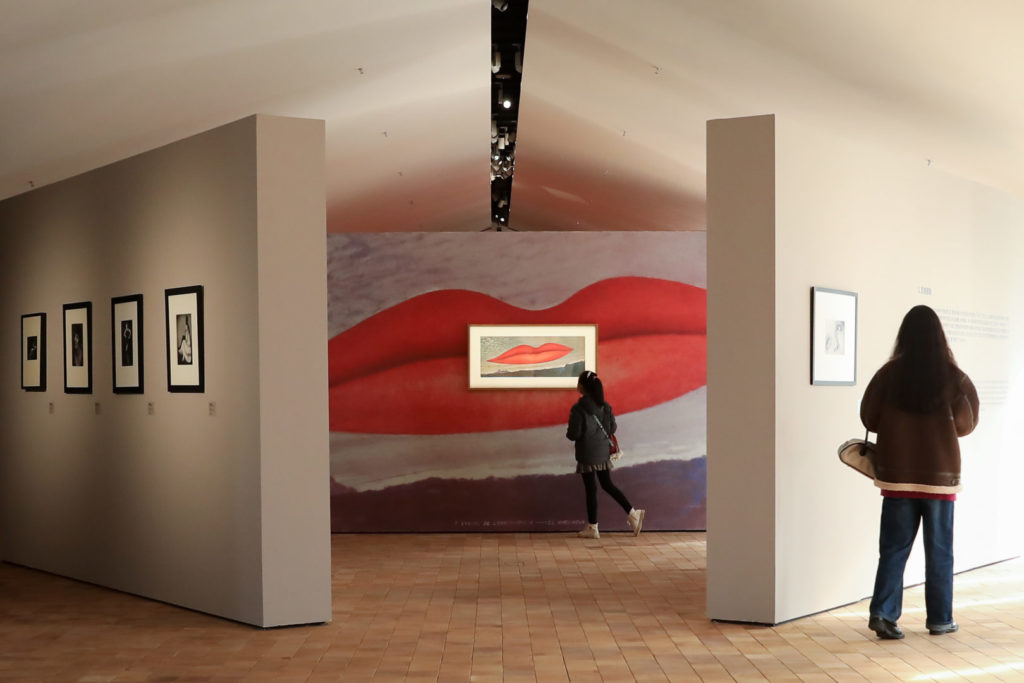
Exhibition view of Man Ray and his muses, TAG Art Museum (Qingdao), 2022. Courtesy TAG Art Museum.
In both cases, the youth and hyperconnectivity of the public require us to rethink the way we experience culture: interactive tours, immersive devices, sensory experiences, and multichannel storytelling are becoming the norm, transforming visits into truly emotional and social events.
Public Museums: they may be free… but there is more to it
Behind the façade of free entry, public museums are transforming. Permanent collections open to all and paid temporary exhibitions: this hybrid model is both popular and profitable. Cultural blockbuster shows have become real engines for drawing visitors and generating revenue.
In Shanghai, the exhibition The Civilization of Ancient Egypt: On Top of the Pyramid(Shanghai Museum, 2025) created a sensation. With loans from the Egyptian Ministry of Tourism and Antiquities, immersive scenography, themed evenings, and more than 1,200 merchandise items, it drew over 2.7 million visitors and generated more than 760 million RMB in revenue in just over a year.
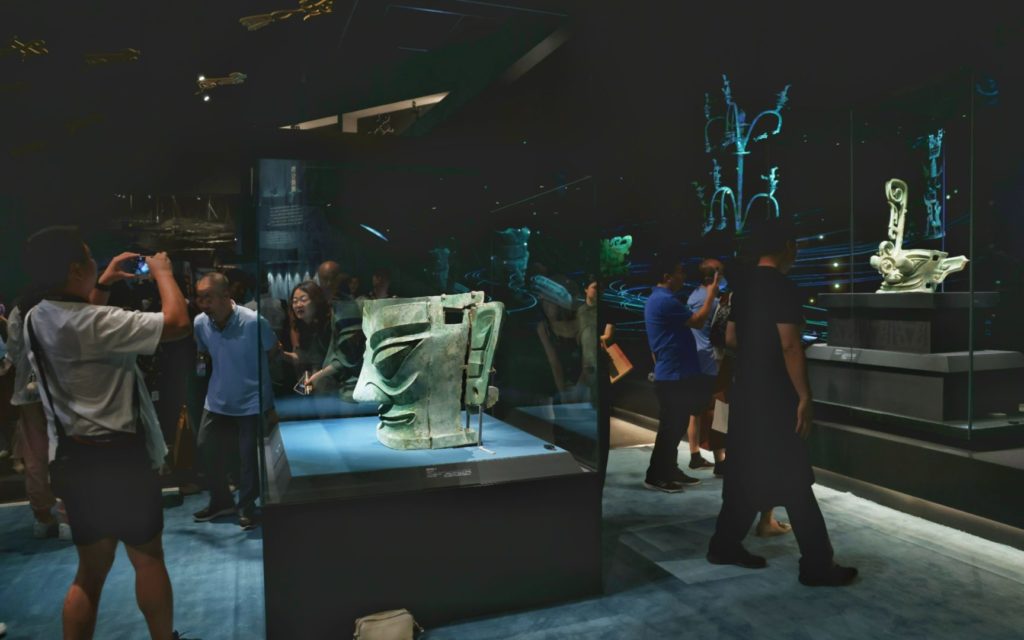
Heritage exhibitions are becoming full-blown events. Stars over China: The Ancient Shu Civilization of Sanxingdui and Jinsha (Grand Canal Museum, 2024; Shanghai Museum, 2024; National Museum of China, 2026) captivated wide audiences with interactive paths and virtual reality, renewing the way heritage is presented and particularly appealing to younger generations.
But this boom remains concentrated: Shanghai and Beijing house the majority of international infrastructure and exhibitions. In 2024 alone, more than 200 museums opened across China, bringing the total to 7,046 museums nationwide, with around 90% free to enter and a record 1.49 billion visits. Culture is no longer a luxury — it is an economic and social engine.
When technology redefines the museum visit
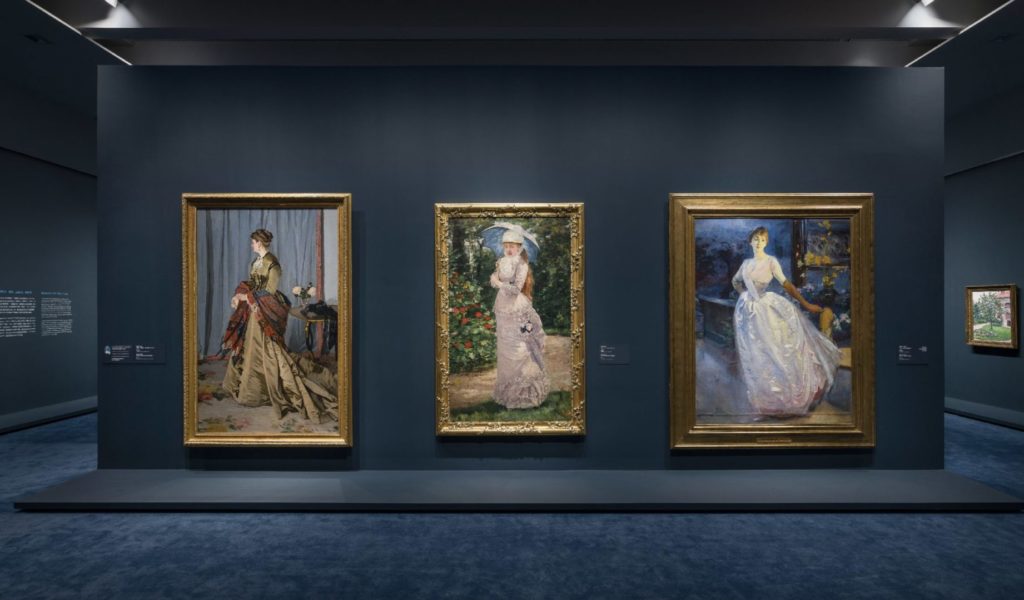
Exhibition view of Paths to Modernity. Masterpieces from Musée d’Orsay, Paris. Pudong Museum of Art, Shanghai, 2025.
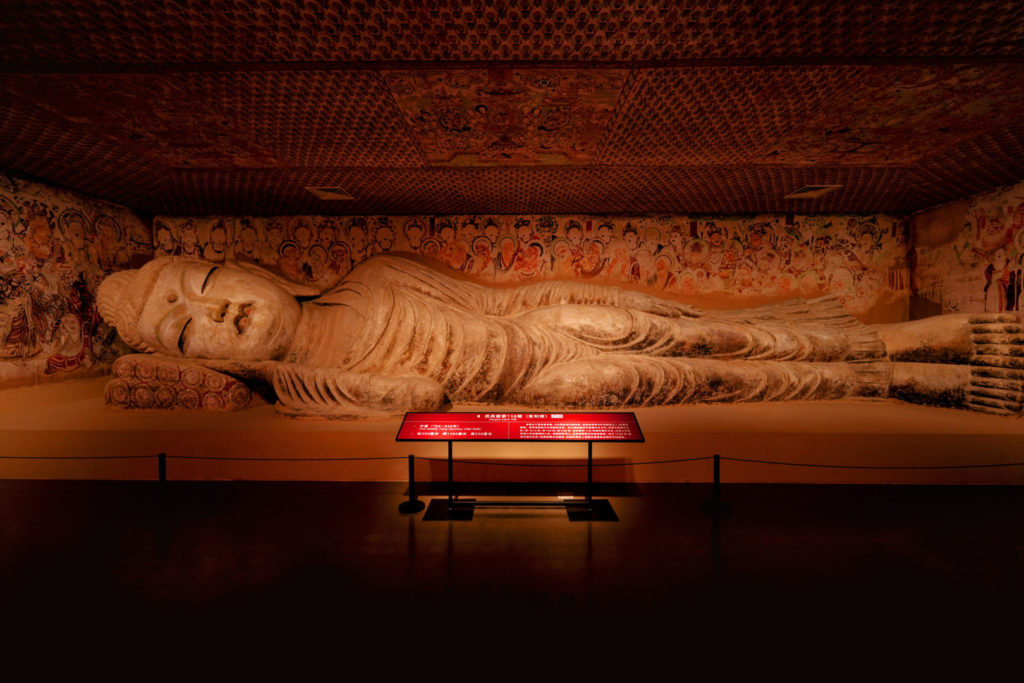
Augmented reality, artificial intelligence, immersive installations: technology is transforming museum visits into sensory experiences. In Beijing, Dunhuang Culture & Art (2025) immersed visitors in the Buddhist world of the Dunhuang caves. The National Museum of China offered The Countless Aspects of Beauty in Ancient Art blending archaeological reconstructions and virtual journeys into the heart of the National Archaeological Museum of Athens’ collections.
The public museum now assumes multiple roles: a place for knowledge transmission, a tourist destination, and an economic lever. National exhibition tours, private partnerships, and expanded merchandise lines are contributing to the emergence of a new cultural economy in China.
International cooperation fits fully into this dynamic. Paths to Modernity: Masterpieces from Musée d’Orsay (Pudong Art Museum, 2025) attracted more than 600,000 visitors, with Courbet, Monet, and Cézanne dialogues staged in immersive scenography that resonated strongly with Chinese audiences.
Private museums: from euphoria to reinvention
The private sector, meanwhile, is navigating more troubled waters. Private museums, which emerged during the real estate boom of the 2010s, have long thrived on the “art + real estate” model. The Shanghe Art Museum in Chengdu, founded in 1998, embodied this alliance between cultural prestige and urban development. The real estate crisis brought this momentum to a screeching halt: visitor numbers are down, and a dozen museums have closed in three years, including the TAG Art Museum in Qingdao and the Guangdong Times Museum in Guangzhou (before its unexpected reopening in 2024).
Yet this pressure has fostered innovation. In five years, more than 50 new private museums opened, opting for lighter structures, lower costs, and locally oriented programming. Creativity remains strong.
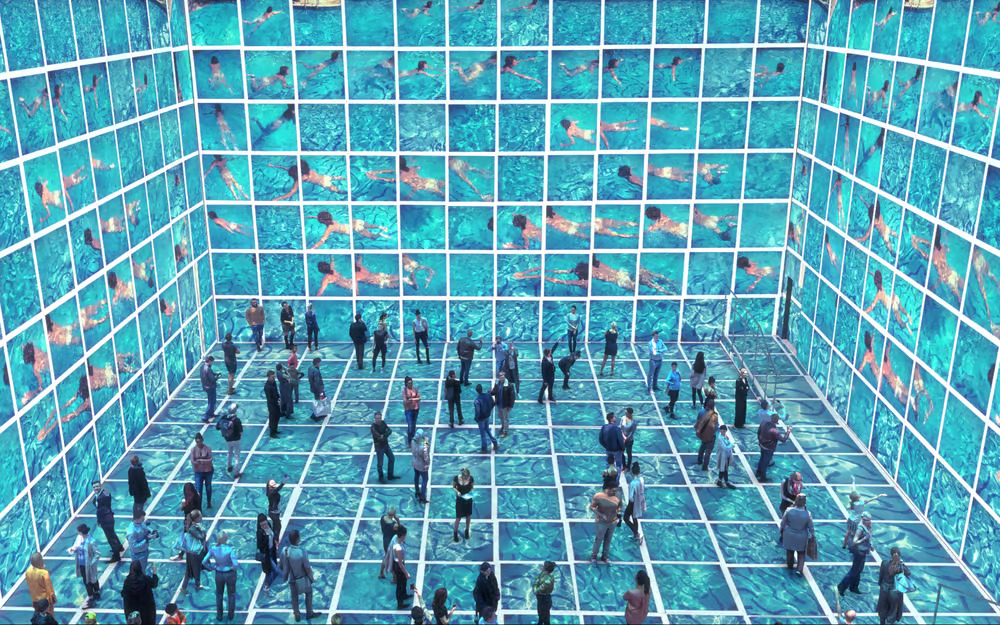
Exhibition view of David Hockney: Bigger & Closer, Pompidou West Bund Museum, Shanghai, 2025.
In Beijing, the Times Art Museum and the Red Brick Art Museum are focusing on narrative immersion. Light, sound, and emotions: Jia Wei. Like Flowers, Mountains, and Seas (2025) combined contemporary art and spirituality, while Chiaru Shiota: Silent Emptiness (2025) offered a meditative experience. In Shanghai, the Centre Pompidou x West Bund Museum presented David Hockney: Bigger & Closer (2025), combining monumental projections and participatory installations.
These museums prioritize accessibility: flexible ticketing, extended hours, cafés, bookshops, and workshops extend the visit. But vigilance remains essential. Frida’s Paradox (Sea World Culture and Arts Center, Shenzhen, 2025) provoked public outrage: advertised as a retrospective, it featured only seven original works. This episode demonstrates that the public is now better informed, attentive to curatorial promises, and quick to voice its expectations.
A two-tiered museum scene
Between public power and private fragility, China presents a contrasting cultural landscape. Well-funded public museums ensure the dissemination of heritage and broad access to culture, while integrating market logic. Private museums tinker, innovate, experiment, often going against the grain.
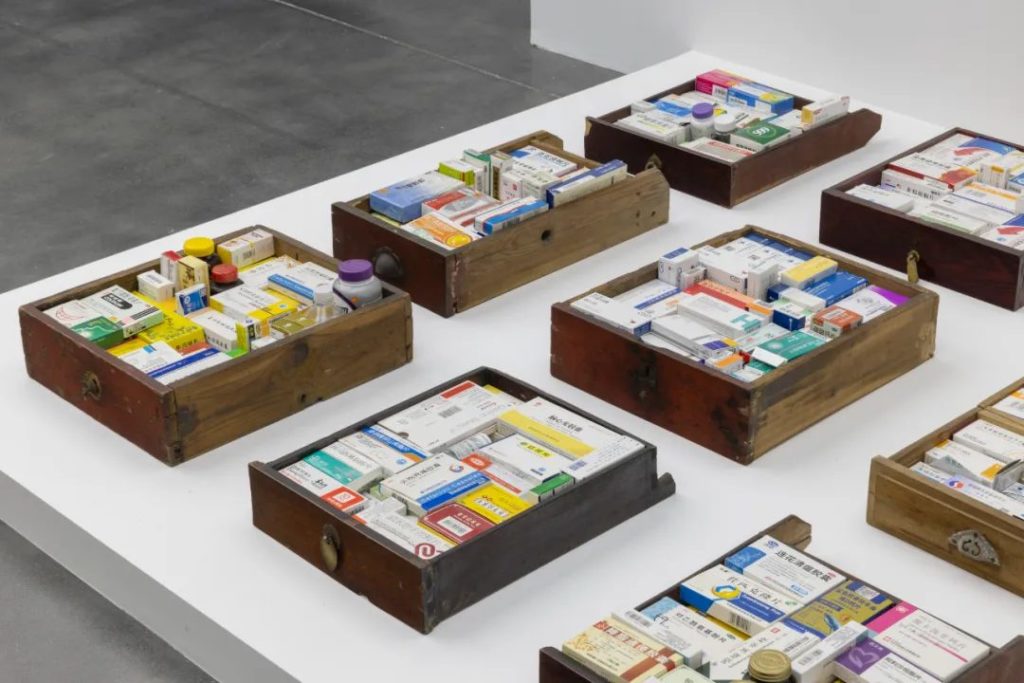
Some institutions transform constraints into creativity. The MACA Art Center in Beijing made a big impression with Bringing Death Back into Life (2025), combining art, sociology, and medicine around the taboo of death. Reactions on social media showed that art can still surprise and move people.
Exhibition view of Unveiling Sanxingdui and Jinsha of Ancient Shu Civilization, 2024, Beijing Grand Canal Museum.
Exhibition view of Bringing Death Back into Life, MACA Art Center, Beijing, 2025.
Private museums are becoming veritable laboratories: free formats, social or spiritual themes, digital communication to reach a young audience. Together, the public and private sectors are redefining the museum experience in China: hybrid, technological, inclusive, where mass attendance and the quest for meaning go hand in hand.
In this changing landscape, exhibiting in China is no longer a simple transfer of content. At a time when China is no longer just exhibiting its heritage but its own transformation, exhibitions are becoming spaces for cultural dialogue in their own right. This requires a detailed understanding of local ecosystems, public expectations, and economic balances. More than ever, the most successful projects are those that combine curatorial standards, cultural intelligence, and storytelling adapted to contemporary Chinese contexts.
We use cookies on our website to give you the most relevant experience by remembering your preferences and repeat visits. By clicking “Accept All”, you consent to the use of ALL the cookies. However, you may visit "Cookie Settings" to provide a controlled consent.
This website uses cookies to improve your experience while you navigate through the website. Out of these, the cookies that are categorized as necessary are stored on your browser as they are essential for the working of basic functionalities of the website. We also use third-party cookies that help us analyze and understand how you use this website. These cookies will be stored in your browser only with your consent. You also have the option to opt-out of these cookies. But opting out of some of these cookies may affect your browsing experience.
Necessary cookies are absolutely essential for the website to function properly. These cookies ensure basic functionalities and security features of the website, anonymously.
Cookie
Duration
Description
cookielawinfo-checkbox-analytics
11 months
This cookie is set by GDPR Cookie Consent plugin. The cookie is used to store the user consent for the cookies in the category "Analytics".
cookielawinfo-checkbox-functional
11 months
The cookie is set by GDPR cookie consent to record the user consent for the cookies in the category "Functional".
cookielawinfo-checkbox-necessary
11 months
This cookie is set by GDPR Cookie Consent plugin. The cookies is used to store the user consent for the cookies in the category "Necessary".
cookielawinfo-checkbox-others
11 months
This cookie is set by GDPR Cookie Consent plugin. The cookie is used to store the user consent for the cookies in the category "Other.
cookielawinfo-checkbox-performance
11 months
This cookie is set by GDPR Cookie Consent plugin. The cookie is used to store the user consent for the cookies in the category "Performance".
viewed_cookie_policy
11 months
The cookie is set by the GDPR Cookie Consent plugin and is used to store whether or not user has consented to the use of cookies. It does not store any personal data.
Functional cookies help to perform certain functionalities like sharing the content of the website on social media platforms, collect feedbacks, and other third-party features.
Performance cookies are used to understand and analyze the key performance indexes of the website which helps in delivering a better user experience for the visitors.
Analytical cookies are used to understand how visitors interact with the website. These cookies help provide information on metrics the number of visitors, bounce rate, traffic source, etc.
Advertisement cookies are used to provide visitors with relevant ads and marketing campaigns. These cookies track visitors across websites and collect information to provide customized ads.