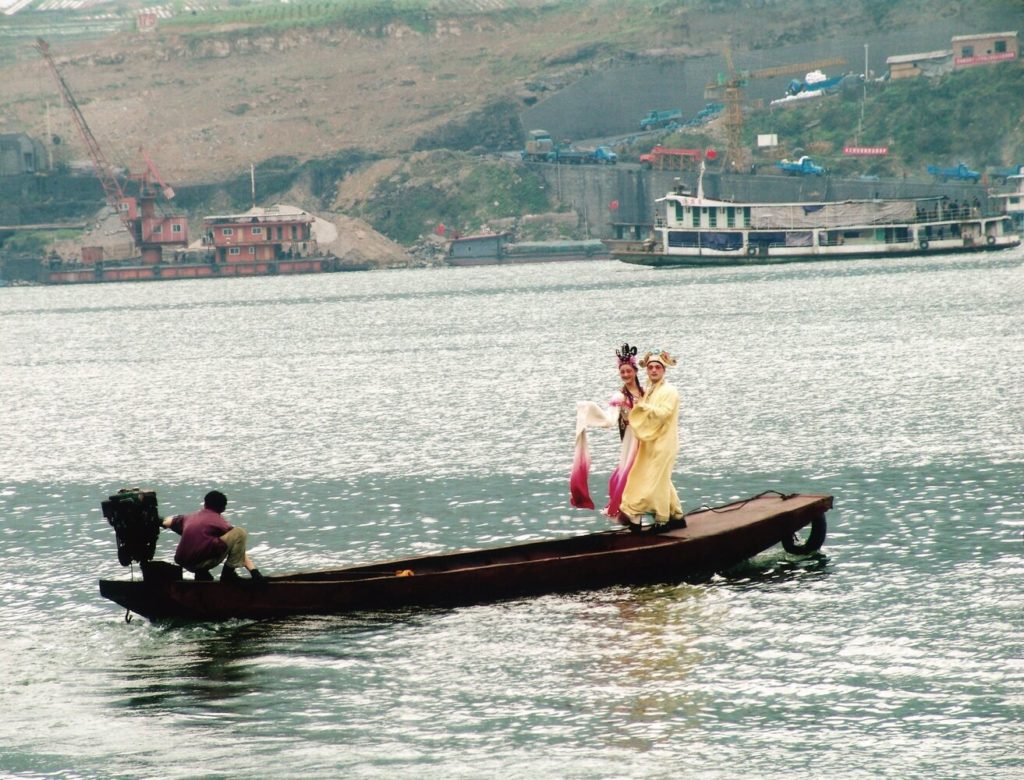
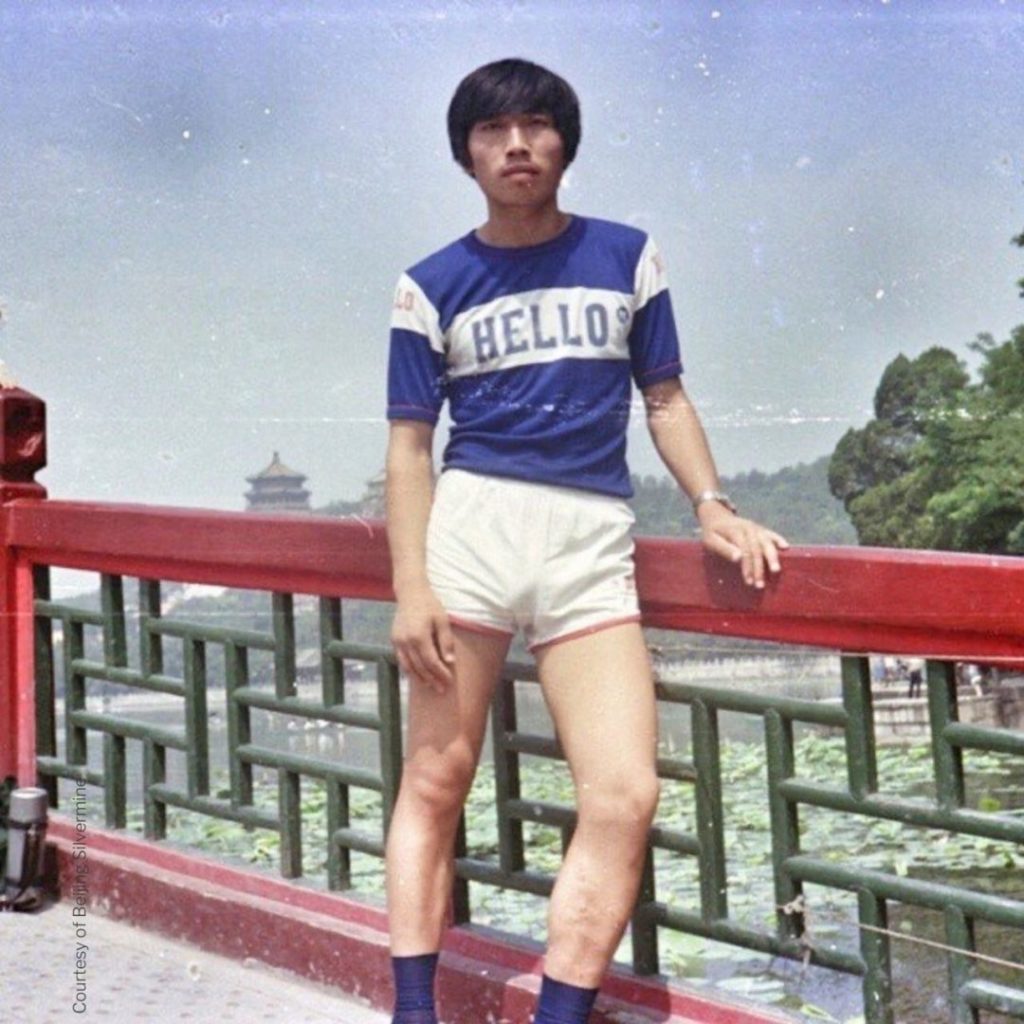
Luo Dan: “Whether road or river, it doesn’t matter — these places are like stages where different reality shows unfold.”

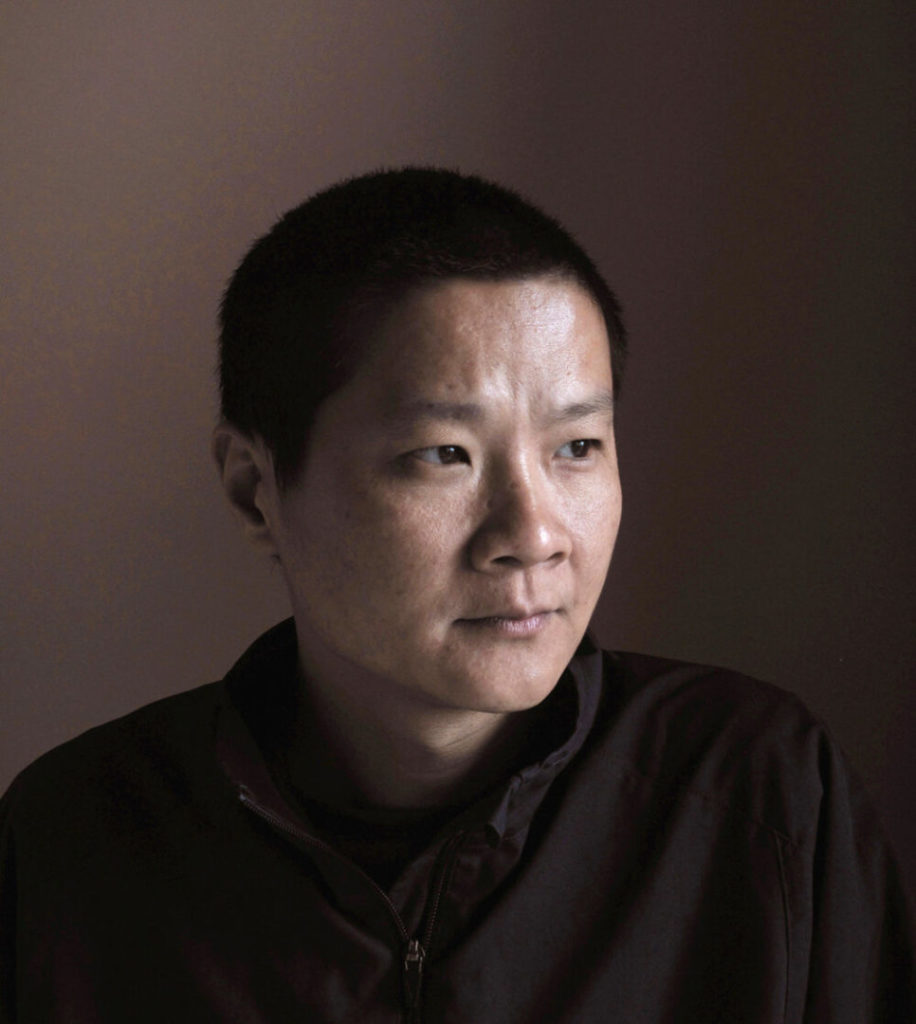
Portrait of Luo Dan. Courtesy of the artist

Luo Dan was born in 1968 in Chongqing and lives in Chengdu. He is a renowned portrait and documentary photographer and graduated from the Sichuan Fine Arts Institute.

After years working as a press photographer, he resigned to travel across China by Jeep, photographing the country from east to west, from Shanghai to Lhasa, along Route 318, using a medium-format camera (China Route 318, 2006). In 2008, he returned to the road, this time traveling from north to south (North and South). For Simple Song (2010–2012), Luo Dan lived for two years in a remote valley in Yunnan (southwest China), within a community whose way of life has remained almost unchanged for a hundred years, and adopted an almost forgotten photographic process: wet plate collodion.

Luo Dan has received several awards in China, including the Art Award China (AAC) (2013), the Hou Dengke Documentary Photography Award (2011), and Best Photographer awards at the Dali (2011) and Lianzhou (2008) photography festivals.

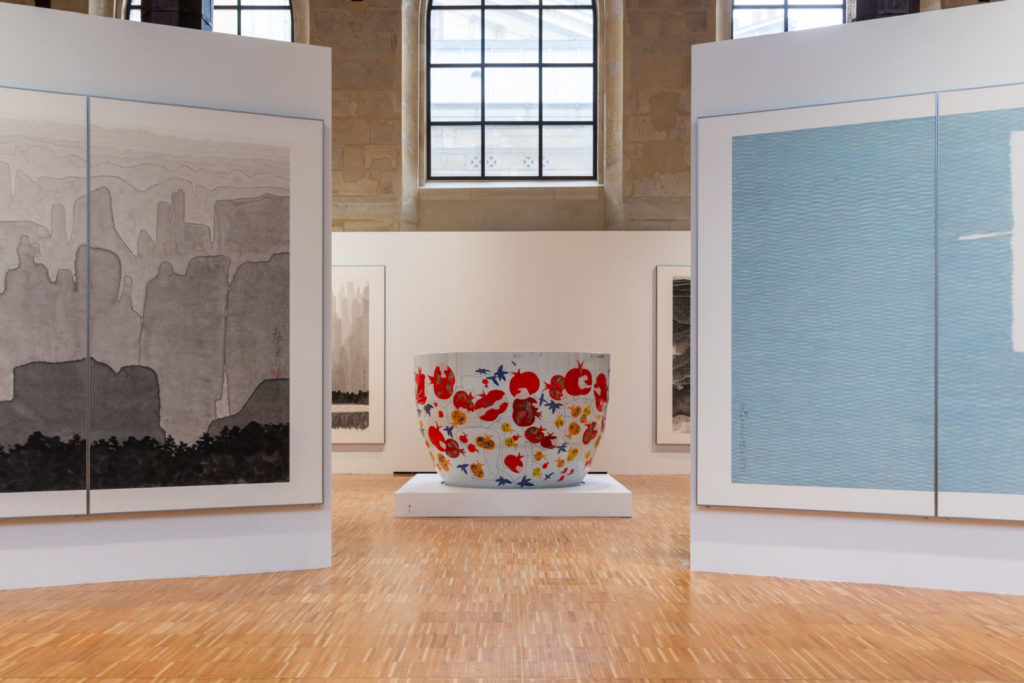
Luo Dan is one of the artists featured in the exhibition Flowing Waters Never Return to the Source.

DoorZine: ou are a photographer of the road. After years working as a press photographer, you resigned in 2006 to drive from Shanghai to Lhasa and photograph what you saw along Route 318 (China Route 318 series). In 2008, you did it again, crossing China from north to south (North and South series). You replaced the digital camera from your journalism years with a medium-format camera. Why did you choose to photograph the Nu River (western Yunnan) for Simple Song in 2010? Did you replace the road with the river?

Luo Dan: I spent four years traveling roads with my camera, which resulted in the two series China Route 318 and North and South, corresponding to two routes crossing China’s vast territory, from east to west and from north to south. On the road, I observed how globalized and developed the country had become since joining the WTO in 2001. But I also examined human existence and the problems people face. As an individual living in China today, I constantly ask myself: what has changed in this country? And what has not?

I photographed many people caught in the sometimes alienating whirlwind of modern development and capitalism. What they experienced, I felt too, though perhaps with a more critical perspective. In response to these two series, I wanted to photograph different people for Simple Song. I found them along the Nu River. Whether road or river, it doesn’t matter — these places are like stages where different reality shows unfold.

DoorZine: Through Simple Song, you pay tribute both to photography—by reviving a forgotten photographic process (wet plate collodion)—and to a Yunnan community whose way of life has barely changed in a hundred years. Why this journey back in time? Did you live there?

Luo Dan: Everything began when a friend told me about the Nu River valley and the beliefs of the people living there. I wanted to see it for myself. In the fall of 2009, I made a short trip of about fifteen days. I saw villages scattered across steep slopes on both sides of the river. Tens of thousands of people from the Lisu and Nu ethnic minorities live there. About 70% of the population is Christian and maintains a form of Christianity infused with local characteristics.

It was their faith that drew me there — a faith that corresponds to a lost dimension of this rapidly modernizing world, something that never fully took root in thousands of years of Chinese history, yet exists miraculously in the most remote valley in the country. That was my first impression, and it led me to decide to live there for a while. I stayed there for two years, from 2010 to 2012.

Luo Dan, “Fuzhou, Fujian.” From the series “North and South” (2008). Courtesy of the artist.

DoorZine: You transformed your van into a darkroom. The wet plate collodion process is long and complex, but it allows you to develop photographs immediately after shooting. In the digital era, when everyone produces images quickly, you chose a technique that is not only rarely practiced but also very demanding. What does this technique bring you, both in use and in visual result?

Luo Dan: I chose wet plate collodion for Simple Song for its visual effect. The series seeks to express a power that transcends time — a form of divinity that can be visually perceived. Today, anyone can easily take photos with a phone. I chose this technique not for its retro aspect, but because depending on temperature, humidity, and water quality, the chemical liquid reacting on the negative behaves differently.

It can create marbling effects that give the illusion of being “caused by time,” a kind of historical texture associated with a contemporary image. It is both present and past. The technique is impractical, complex, and unpredictable — all characteristics that create this illusion and make time visually perceptible. It could look like it was taken a hundred years ago. It could be today — or even a hundred years from now.

 Luo-Dan-tenant-une-plaque-de-verre-de-la-série-Simple-Song-2010.Avec-l'autorisation-de-l'artiste

Luo Dan holding a glass plate from the series "Simple Song", 2010. Courtesy of the artist.

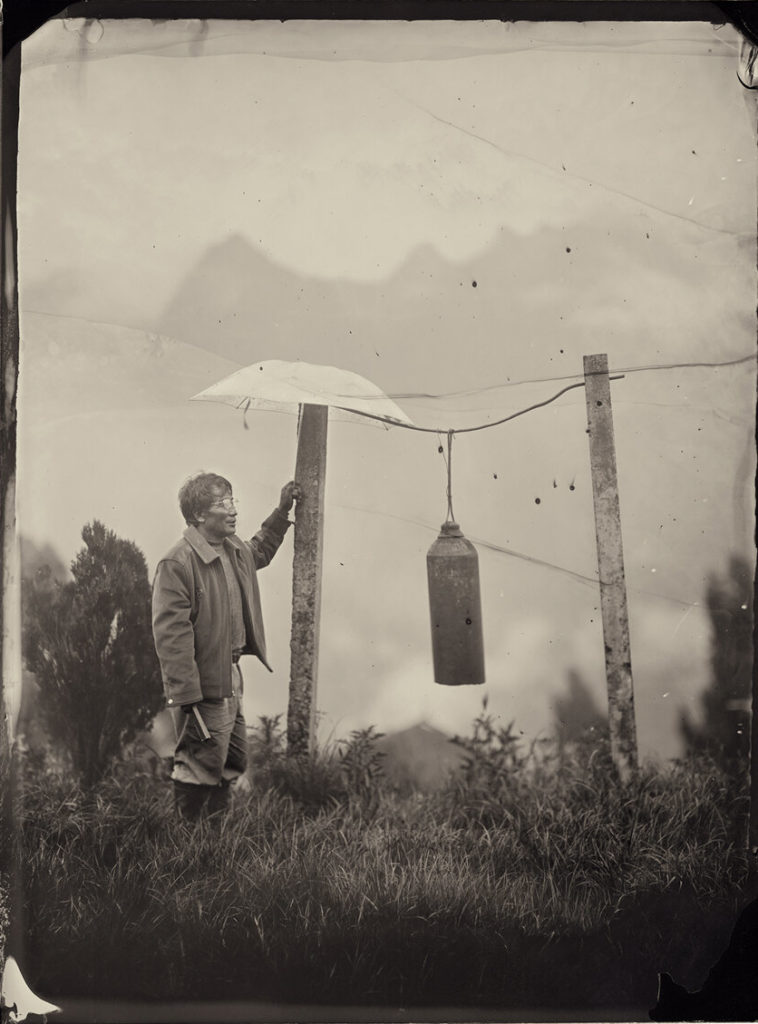
 Luo Dan-Simple-Song-No-25-John-is-knocking-the-bell-LaoMuDeng-Village-2010

Luo Dan, "Simple Song No. 25". John is knocking the bell, LaoMuDeng Village (2010), Simple Song series (2010-2012). Courtesy of the artist.

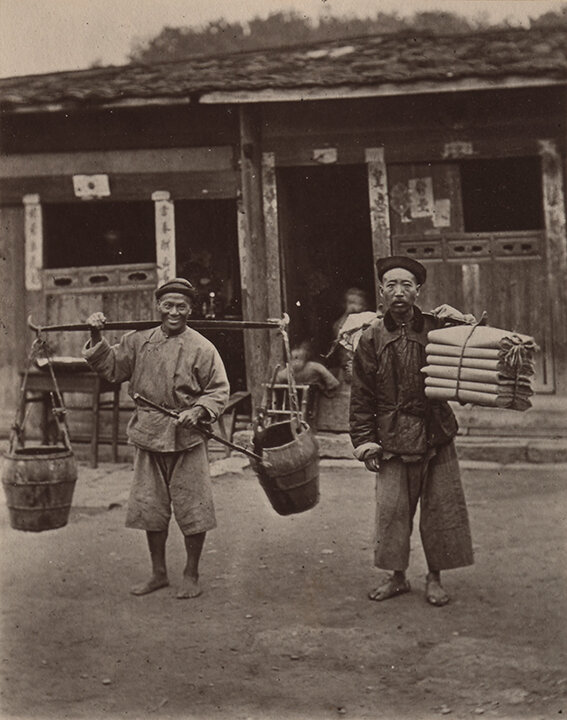
 Luo-Dan-porteurs

Luo Dan, "Simple Song n°27. Pu A Qi, village de Shimendeng" (2010), série "Simple Song"(2010-2012). Avec l'autorisation de l’artiste.

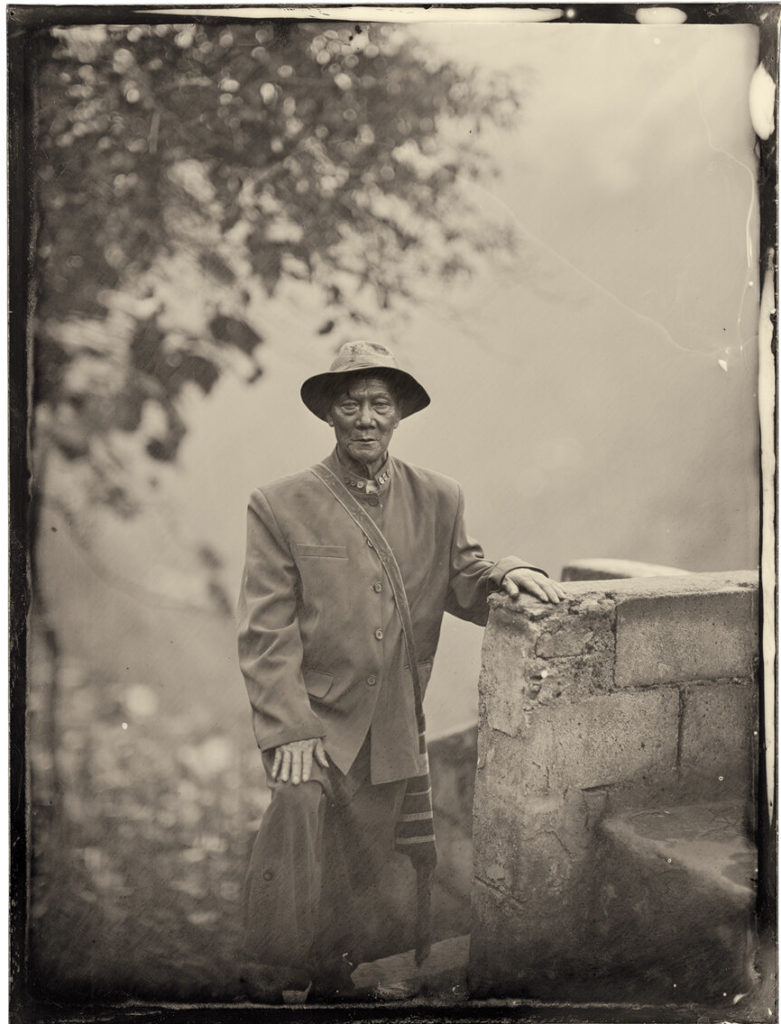
 Luo-Dan-Simple-Song-No-27-Pu-A-Qi-Shimendeng-Village-2010

Luo Dan, "Simple Song No. 27: Pu A Qi, Shimendeng Village" (2010), from the series Simple Song (2010–2012). Courtesy of the artist.

DoorZine: In doing so, you echo the early days of photography in China, when photography was introduced in the mid-19th century by missionaries, explorers, and Western traders. One might think of John Thomson’s photographs* in Fujian along the Min River. What photographic legacy inspired you?

What’s interesting is that throughout the entire process of creating Simple Song, I carried the Chinese edition of China: Through the Lens of John Thomson 1868–1872, which served as a technical guide. Through this book, I had countless conversations with Thomson, even though 140 years separate us. The technical problems he faced then also confronted me: difficulty finding suitable water sources, uncontrollable chemical variations due to climate, difficulty communicating with subjects who didn’t speak the same language.

Of course, the challenges he faced were even greater than mine. I was fortunate to present Simple Song in dialogue with Thomson’s Min River photographs in 2019 at the Peabody Essex Museum** in the United States. In 1870, Thomson had no choice but to use wet plate collodion. 140 years later, I chose to use the same technique. In the history of photography, artists such as Hill and Adamson***, Julia Margaret Cameron****, and Nadar***** have all had a major influence on me.

DoorZine: In your previous work, you addressed modernization and globalization in China. Is this still the case with Simple Song, a series that appears almost timeless?

Simple Song and my two previous series follow the same internal logic: they respond to the issues raised by globalization and modernization in China — even if Simple Song uses a different visual language. These are universal issues, not limited to China.

 Luo-Dan-Série-North-and-South-2008.-Quanzhou-Fujian-Avec-l'autorisation-de-l'artiste

Luo Dan, “Quanzhou, Fujian,” 2008. From the series North and South. Courtesy of the artist.

 Luo-Dan-Série-North-and-South-2008.-Changsha-Hunan.Avec-l'autorisation-de-l'artiste

Luo Dan, “Changsha, Hunan” 2008. From the series North and South. Courtesy of the artist.

 Luo-Dan-Série-China-Route-318-Xian-de-Bomi-Tibet.-2006.Avec-l'autorisation-de-l'artiste

Luo Dan, “Xian de Bomi, Tibet”. From the series China Route 318" (2006). Courtesy of the artist.

*John Thomson (1837–1921) was a Scottish photographer and explorer. He was one of the first photographers to travel to the East (Singapore, India, Ceylon, Cambodia, China, Vietnam, etc.), bringing back numerous images documenting people, landscapes, and objects related to Asian cultures. After establishing his studio in Hong Kong in 1868, he began traveling throughout China. Over four years, he journeyed across the country, from the southern regions (Canton and Fujian) to the Great Wall in the north, passing through Beijing, Shanghai, and the Yangtze River. Between 1870 and 1871, he visited the Fujian region and traveled up the Min River by boat with an American Protestant missionary, Reverend Justus Doolittle. This journey resulted in an album published in 1873, Foochow and the River Min. Between 1873 and 1874, the four volumes of Illustrations of China and Its People were published—one of the earliest photographic albums on China—which helped introduce the country to Victorian England.

**The exhibition A Lasting Memento: John Thomson’s Photographs Along the River Min, organized at the Peabody Essex Museum (June 1, 2019 – May 17, 2020), presented around forty photographs by John Thomson taken in Fujian, from the museum’s collection, in dialogue with ten works by Luo Dan from the Simple Song series.

*** In 1843, painter David Octavius Hill (1802–1870) and engineer Robert Adamson (1821–1848) founded Scotland’s first photographic studio. They were pioneers in the production of “artistic” photography and created hundreds of portraits reminiscent of Rembrandt’s work. Between 1843 and 1845, they produced what is considered the first photo reportage in history, documenting the lives of sailors and oyster fishermen in Newhaven.

****Julia Margaret Cameron (1815–1879) was a British photographer known for her portraits—particularly of notable figures of her time—and for photographic illustrations inspired by English Pre-Raphaelite painting. She spent the final years of her life in Ceylon, where she continued her photographic practice.

*****Born Félix Tournachon, Nadar (1820–1910) was the photographer of 19th-century celebrities: Baudelaire, Delacroix, and Sarah Bernhardt all posed before his lens. A visionary, he also made history by becoming the first aerial photographer.

Interview conducted by Victoria Jonathan & Bérénice Angremy.

Read the full interview with Luo Dan in the bilingual French–Chinese catalog of the exhibition Flowing Waters Never Return to the Source available for purchase starting July 15, 2020 on the Bandini Books website.

To learn more about Zhang Xiao’s work, visit his Instagram: @luodan68

Luo Dan is represented by galerie M97.

Related DoorZine Articles
Winner of the National Geographic Picks Global Prize (2008) and the Prix découverte des Rencontres d’Arles (2014), Zhang Kechun photographs the landscapes of contemporary China. He became known for his series The Yellow River, created between 2010 and 2015 around the Yellow River.
Related Projects

Newsletter

Subscribe to our newsletter – get your foot in the door!