Jia Zhangke: “I wanted to acknowledge the sensory link between contemporary history and ancient times.”

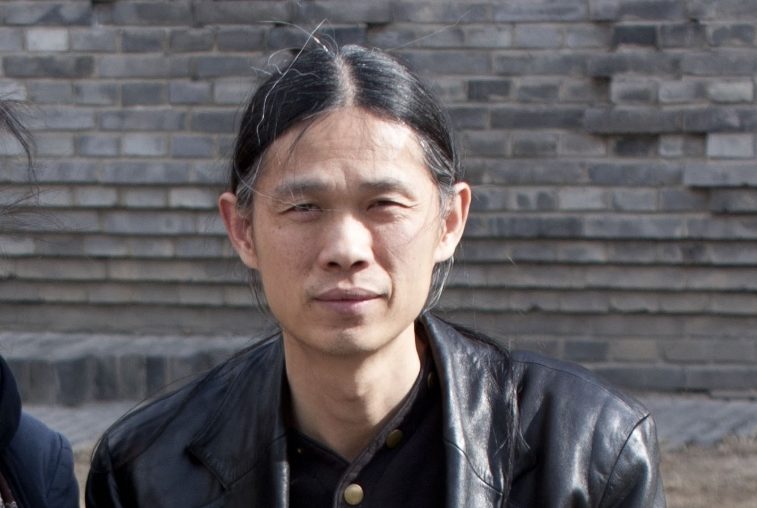
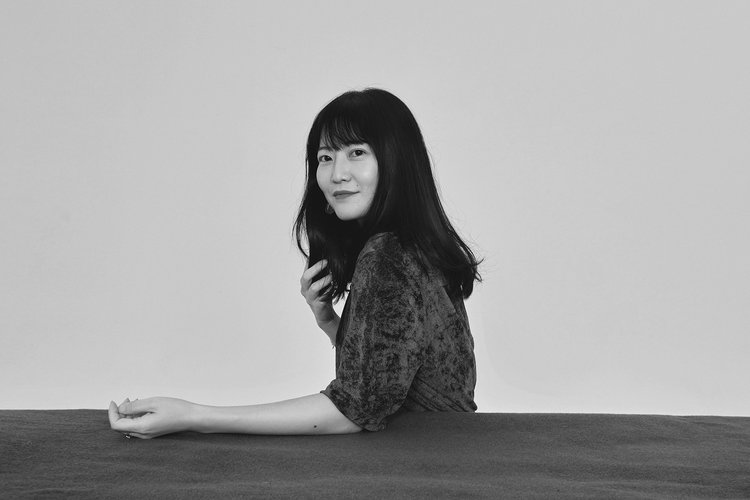
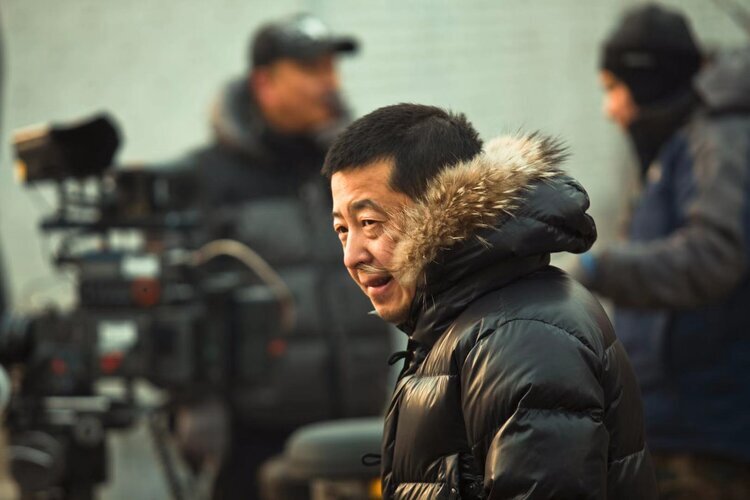
Portrait de Jia Zhangke. Avec l’autorisation de l’artiste.

Jia Zhangke was born in 1970 in Fenyang and lives in Beijing. Considered one of China’s greatest directors, Jia Zhangke develops a cinema rooted in the realities of contemporary China, playing on the boundary between fiction and documentary.

Trained at the Beijing Film Academy, he belongs to the sixth generation of Chinese filmmakers known as “underground.” While his camera always stays close to his characters, space is also a character in its own right in his films: the city (Xiao Wu, Artisan Pickpocket, Unknown Pleasures, I Wish I Knew), the Three Gorges Dam (Dong, Still Life), and even a world recreated in miniature (The World). In 2013, A Touch of Sin won him the Best Screenplay Award at the Cannes Film Festival. His latest films, Mountains May Depart (2015) and The Wandering Earth (2018), combine romantic stories with portraits of globalized China.

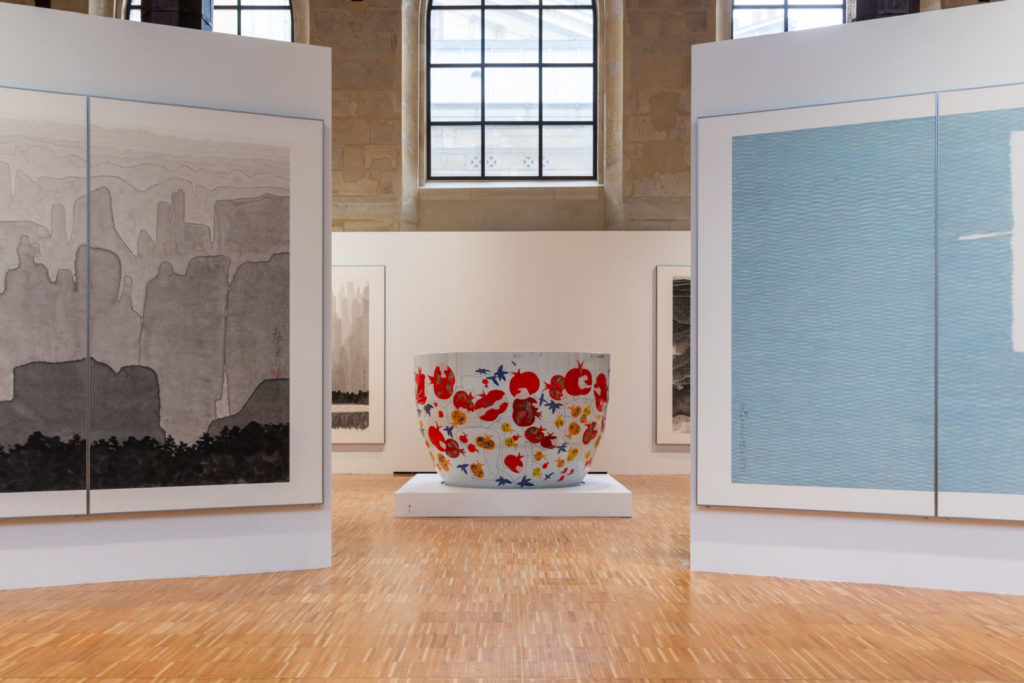
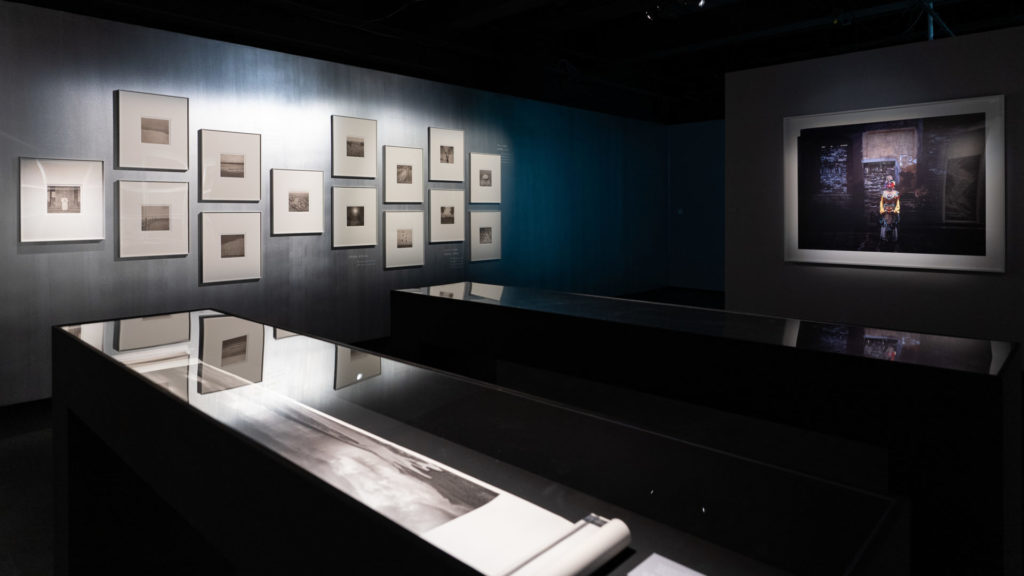
Jia Zhangke is one of the artists featured in the exhibition “The Flows That Have Passed Do Not Return to Their Source”.

DoorZine: What prompted you to go and film the Three Gorges Dam region?

Jia Zhangke: At the time, the Three Gorges Dam project was in full swing, and artist Liu Xiaodong was going there to create a series of paintings. I had always wanted to make a documentary about Liu Xiaodong, so I went with him to the Three Gorges. When we arrived in Fengjie, I was shocked by the sight of the ruins. Fengjie has 3,000 years of history—it’s such an ancient city! At that point, the demolition phase was coming to an end, and the entire city was already in ruins. Colossal changes were taking place: a million people displaced and 3,000 years of history reduced to dust, a city soon to be submerged by water… The individual is powerless in the face of such upheavals. However, amidst the fields of ruins, my gaze was drawn to the workers who were carrying out the demolition. With their tanned skin and sweat, they were full of vitality. This vitality and the ruins formed a contrast that made me want to shoot a film in the Three Gorges.

DoorZine: Why did you make the documentary Dong and the fiction film Still Life on the same subject in 2006? What is the connection between the two films?

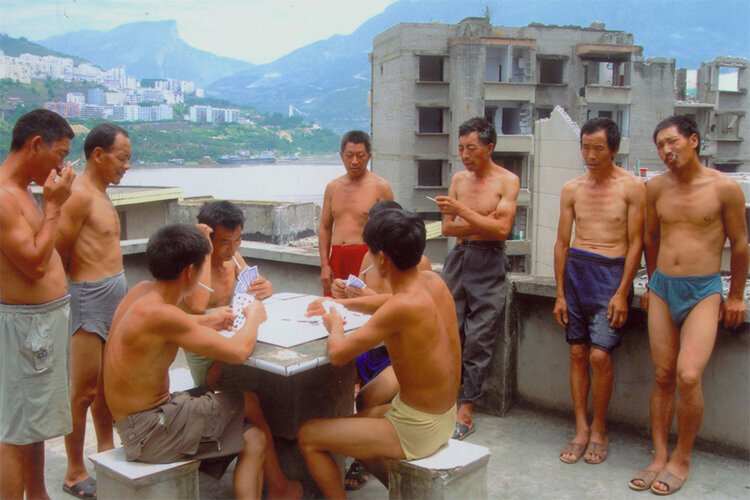
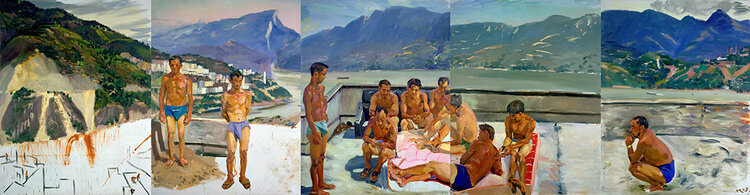
Initially, my intention was to make a documentary about Liu Xiaodong and his pictorial universe. I first went to one of his exhibitions in 1990 and immediately loved his painting. He has a talent for detecting unexpected poetry in our everyday lives. My documentary project was blocked and postponed several times. Finally, one day, Liu Xiaodong told me he was going to the Three Gorges to paint eleven workers, and I decided to follow him to shoot Dong. After I arrived in the Three Gorges to shoot the documentary, life there began to spark my imagination. The people there are very determined. They call looking for a job “finding a way to live.” They calmly accept difficulties and burst with vitality. No hardship in life can hide the beauty of life itself. So, while filming Dong, seeing these characters running after life come and go in the camera’s viewfinder, I suddenly began to imagine their existence once they were out of the frame. Taciturn and under pressure, they don’t easily open up to others to tell their stories. So I started shooting Still Life during the filming of Dong. The spaces that appear in the documentary also appear in the fiction film, and the characters in one are also the characters in the other.

Jia Zhangke, extraits du film Dong, documentaire de 76mn (2006). Avec l’autorisation d’Ad Vitam.

DoorZine: The Three Gorges region has inspired many painters and poets in the classical tradition. Has this heritage inspired you in turn? We are thinking in particular of your use of traveling shots, which seem to echo the movement of a Chinese painting scroll.

The landscapes of the Three Gorges region themselves are very reminiscent of Chinese scroll painting. When I was in the Three Gorges, whether by boat or on foot along the river, what I saw constantly reminded me of traditional painting. Scroll paintings are viewed horizontally, with the scenes unfolding slowly in perspective, and the landscapes and characters constantly changing. For the foreground shots in Still Life, we installed a traveling rail on a boat and then slowly filmed the face of each passenger. I wanted to convey the impression created by scroll painting, because that’s how I felt when I saw this landscape. Later, during the film’s color grading phase, we enhanced the greens because we wanted to get closer to the tradition of “blue and green shanshui” in classical Chinese painting. The Three Gorges gave me a powerful feeling: the mountains and the Yangtze River we see today are the same ones that the poet Li Bai (701-762) contemplated during the Tang Dynasty. A few hundred years later, the mountains have not changed, nor has the river, but people have changed enormously. I wanted to capture the sensory link between contemporary history and ancient times, so we filmed several sequences imitating scroll painting.

DoorZine: In Still Life, there is a realistic approach, but you also incorporate fantastical scenes using digital effects (a building flies away like a spaceship, a flying saucer passes through the sky, a man walks on a tightrope stretched between two buildings). Why this mixture? What is realism today?

The first time I visited the Three Gorges, the demolition phase was almost complete, and I was struck by the surreal atmosphere there. When I saw this field of ruins, my first impression was that it was unreal; it was as if some strange force had come and destroyed the earth. When I saw this strange building, the memorial to the Three Gorges migrants, I immediately thought it was going to take off. It didn’t belong there. At the time, the violent changes China was undergoing seemed magical to me. In reality, it wasn’t just the Three Gorges region that was surreal. The speed and radical nature of China’s development as a whole created this unreal feeling. Within reality itself, a surreal atmosphere was emerging. I wanted to capture the unreal feeling experienced by the inhabitants of these places by incorporating supernatural elements into the film, such as a flying saucer and the memorial to migrants taking flight.

Liu Xiaodong, “Hot Bed No.1”, 2005. Avec l’autorisation de l’artiste.

DoorZine: Dong plays on the porosity between three layers of representation of the Three Gorges: documentary film, fiction film, and painting. Han Sanming links the three, as he also appears in Liu Xiaodong’s paintings. Why this permeability between three modes of representation of the same subject?

Han Sanming is my cousin, and he is a real miner. I find him extremely convincing on screen. He first appeared in my films in Platform, then in The World and Still Life. He always plays silent characters, because in real life he doesn’t like to talk much. However, without saying a word, his character reveals many aspects of his life. For me, Han Sanming represents a large category of individuals. They are not just migrant workers, nor those we call honest people; they are what I call the millions of Chinese people who have no rights. Like the right to tell their own story.

DoorZine: At the end of Dong, Liu Xiaodong says about his series and the fate of the people and landscapes disrupted by the Three Gorges Dam project: “It’s ridiculous to think that art can change things. (…) As long as I live, I will try to express my point of view. I represent them by painting their bodies and expressing some of my ideas. But I also hope that my painting restores the dignity that every human being possesses.” You have made two films on the same subject. By winning the Golden Lion in Venice in 2006, Still Life brought the Three Gorges Dam project and its consequences for individuals, particularly Chinese workers, to the attention of the Western world. Do you think cinema can change things?

I have always believed that cinema, as an element of culture, could hardly bring about concrete change in people and society in the short term. But our society, in order to open up and progress, relies mainly on cultural changes. I am thinking, for example, of the May Fourth Movement*, which arose primarily from a reform of the Chinese language, from an evolution from classical literary writing to modern vernacular writing. The impact of such a cultural change on China is still felt today. We filmmakers must not exaggerate the importance of our work, but we must firmly believe in the power of culture.

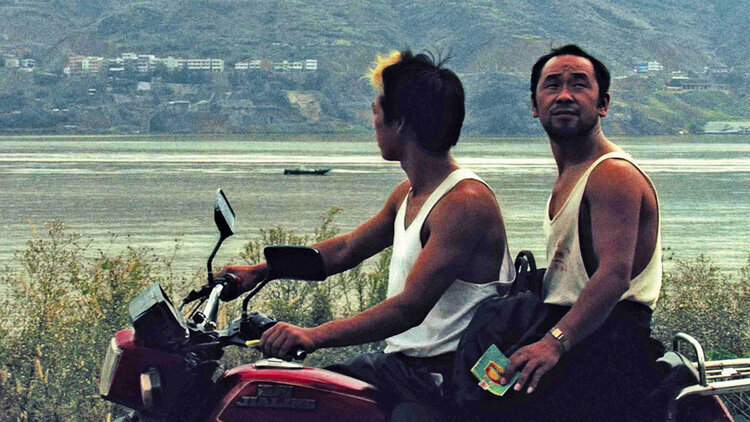
Jia Zhangke, extraits du film “Still Life”, film de 108 mn (2006). Avec l’autorisation d’Ad Vitam.

*The May Fourth Movement was a political, cultural, and anti-imperialist movement that arose from a student demonstration in Beijing on May 4, 1919. Originally protesting against the government’s weakness in the face of Europe (Treaty of Versailles) and Japanese domination, the movement spread throughout China and led to a renewal of the political and intellectual elites and the “New Culture Movement” (1915-1921).

Denouncing the weight of tradition, imperialism, and the oppression of women, the movement promoted modernity, science, and democracy. It reflected the emergence of patriotic consciousness in China and the abolition of the Manchu empire. The movement contributed significantly to the development of Marxist thought in China and to the ideological foundation of the Chinese Communist Party, which was founded in 1921 by activists.

Interview conducted by Victoria Jonathan & Bérénice Angremy.

Read the full interview with Jia Zhangke in the bilingual French-Chinese catalog for the exhibition “Les flots écoulés ne reviennent pas à la source” (Waters that have flowed away do not return to their source), available for purchase starting July 15, 2020, on the Bandini Books website!

Related DoorZine Articles
Founder of the Three Shadows Photography Art Centre and the Jimei x Arles international Photo Festival, Rong Rong celebrated in 2017 the tenth anniversary of the Three Shadows award.
Related Projects

Newsletter

Subscribe to our newsletter – get your foot in the door!