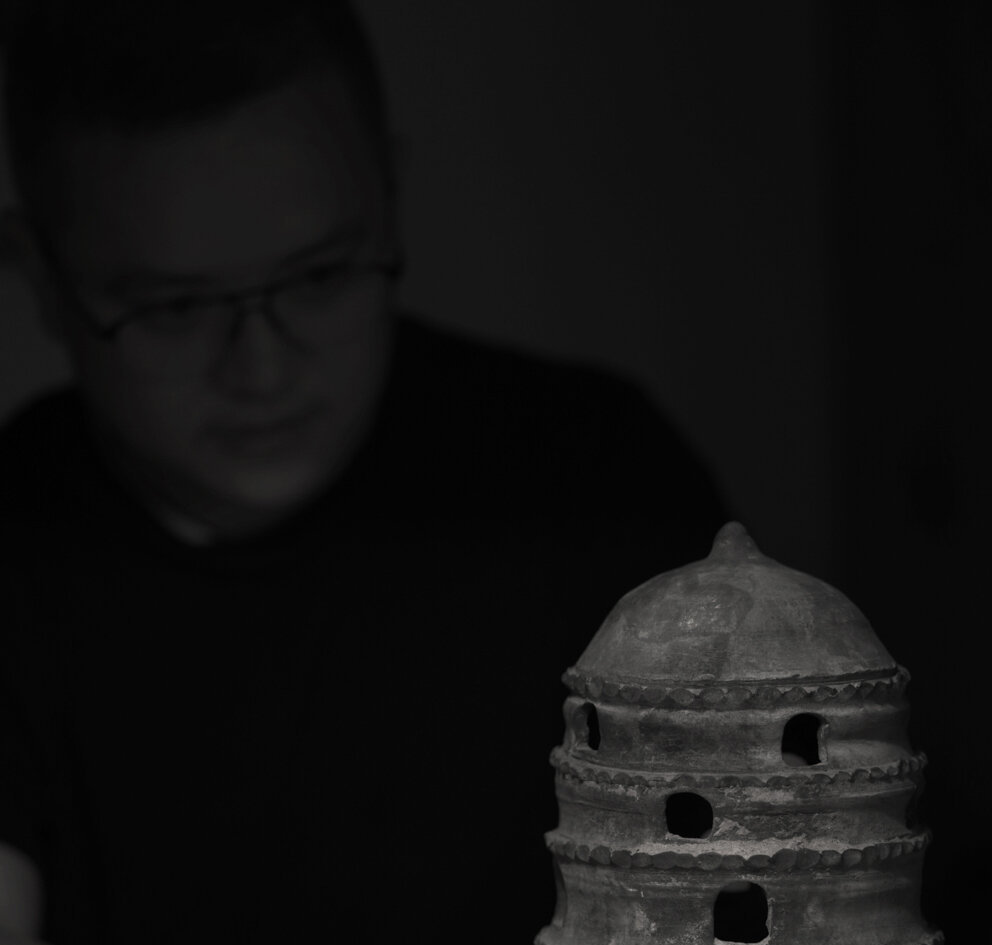
Taca Sui: “Poetry and photography are, in some ways, similar in the way they preserve fragments of history and reality.”
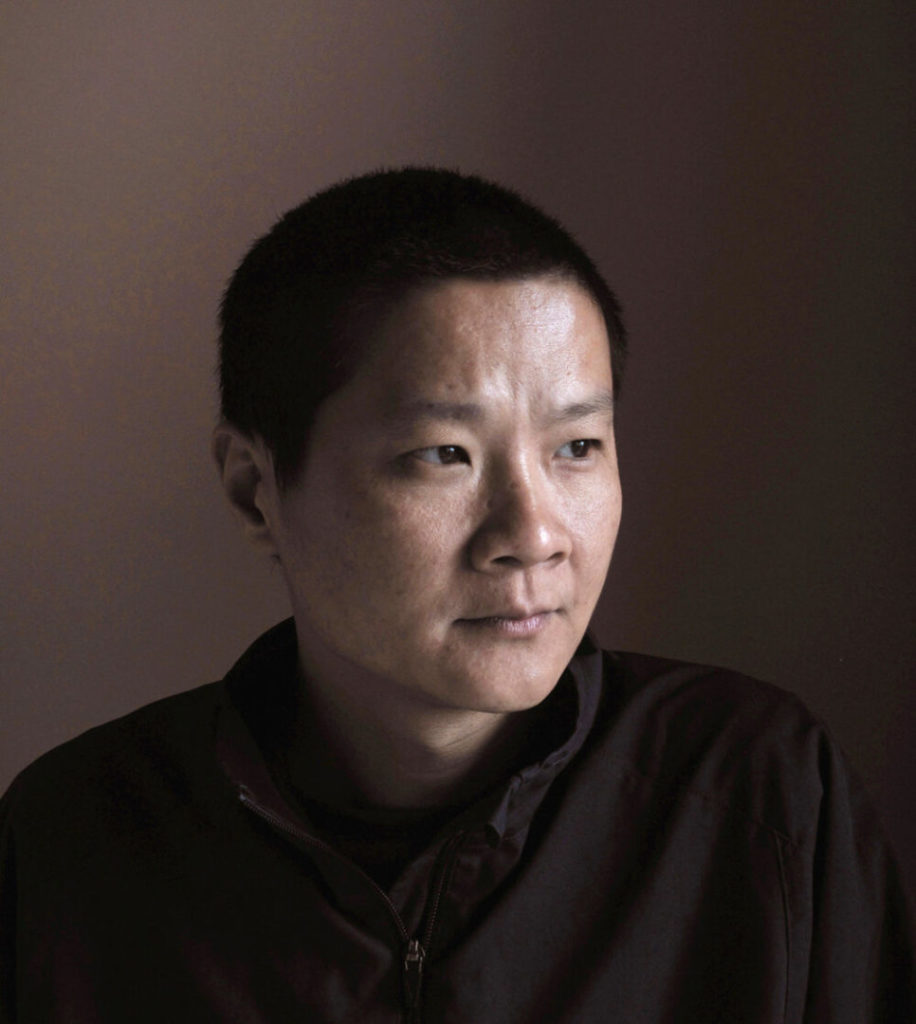
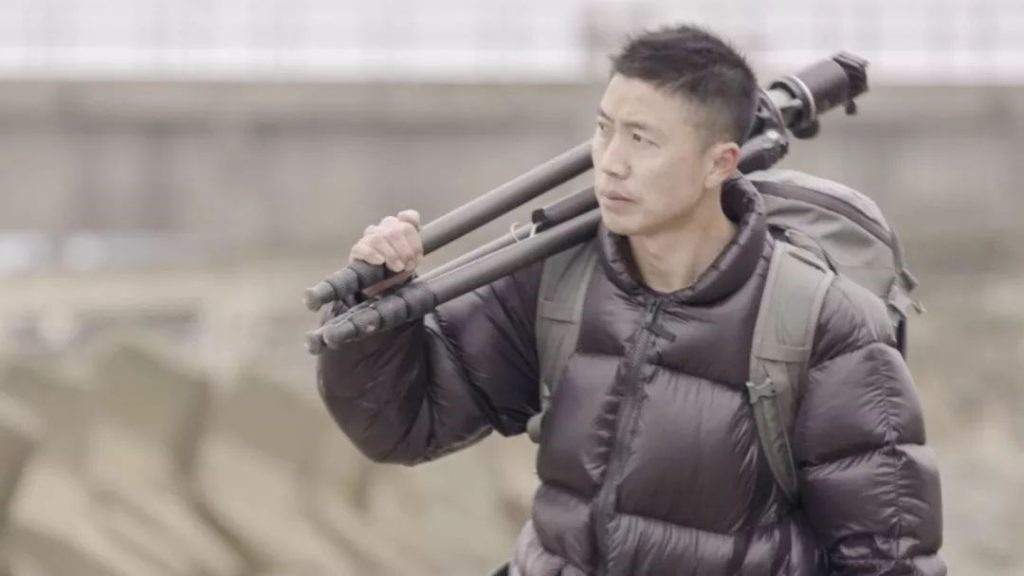
Taca Sui was born in 1984 in Qingdao and lives between that city and New York. He graduated from the China Academy of Art (Beijing) and the Rochester Institute of Technology (United States).
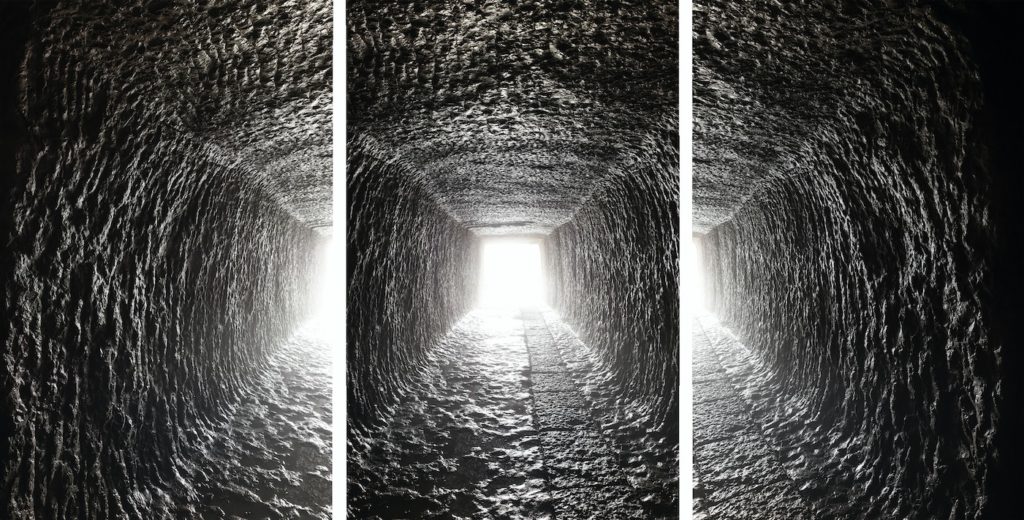
In his twenties, Taca Sui devoted a year to studying the Book of Odes (Shijing), the oldest known collection of Chinese poetry. Sui’s works resonate with the elliptical nature of these poems: his images seem suspended, caught in a strange state of waiting. The series Odes was acquired and exhibited by the Metropolitan Museum of Art in New York in 2014. His more recent series—Steles, Revealed, and Grotto Heavens—also revisit Chinese civilization.
DoorZine: In your twenties, you spent a year studying the Book of Odes (Shijing)*, the oldest known collection of Chinese poetry. Inspired by these poems—considered a unique testimony to ancient Chinese civilization—you photographed between 2009 and 2013 the regions of northern China depicted in the Book of Odes. Armed with a map dating from the Qing dynasty (1644–1912), you set out in search of the mountains, rivers, ruins, and paths evoked in a text more than two thousand years old. Why this fascination with a text that, though foundational to Chinese history, is relatively unfamiliar to today’s (young) public?
Taca Sui: The origin of the series Odes is actually very simple. When I was still a student in New York, I spent much of my time outside of classes reading books online. Living abroad, reading these classical Chinese texts resonated deeply with me, especially the beautiful poems of the Book of Odes and the Elegies of Chu. Looking back, there must have been a strong sense of identity anxiety behind all of this…
Many Chinese people read the Book of Odes as children. But rereading it as an adult while living abroad was an entirely different experience. I felt a great closeness to this text, which stands apart from the solemn spirit of other Chinese classics. Zhou Zuoren*** described the Book of Odes as written in a “living language” and with “sincere” emotion. The poems describe all kinds of flowers and trees, birds and insects, mountains and rivers, beautiful girls—as if they were right there within reach. That is what made me want to visit the places mentioned in the Book of Odes. These places that inspired such beautiful poems—what have they become more than two thousand years later?
DoorZine: Did you find what you were looking for in 21st-century China? What remains of this ancient civilization?
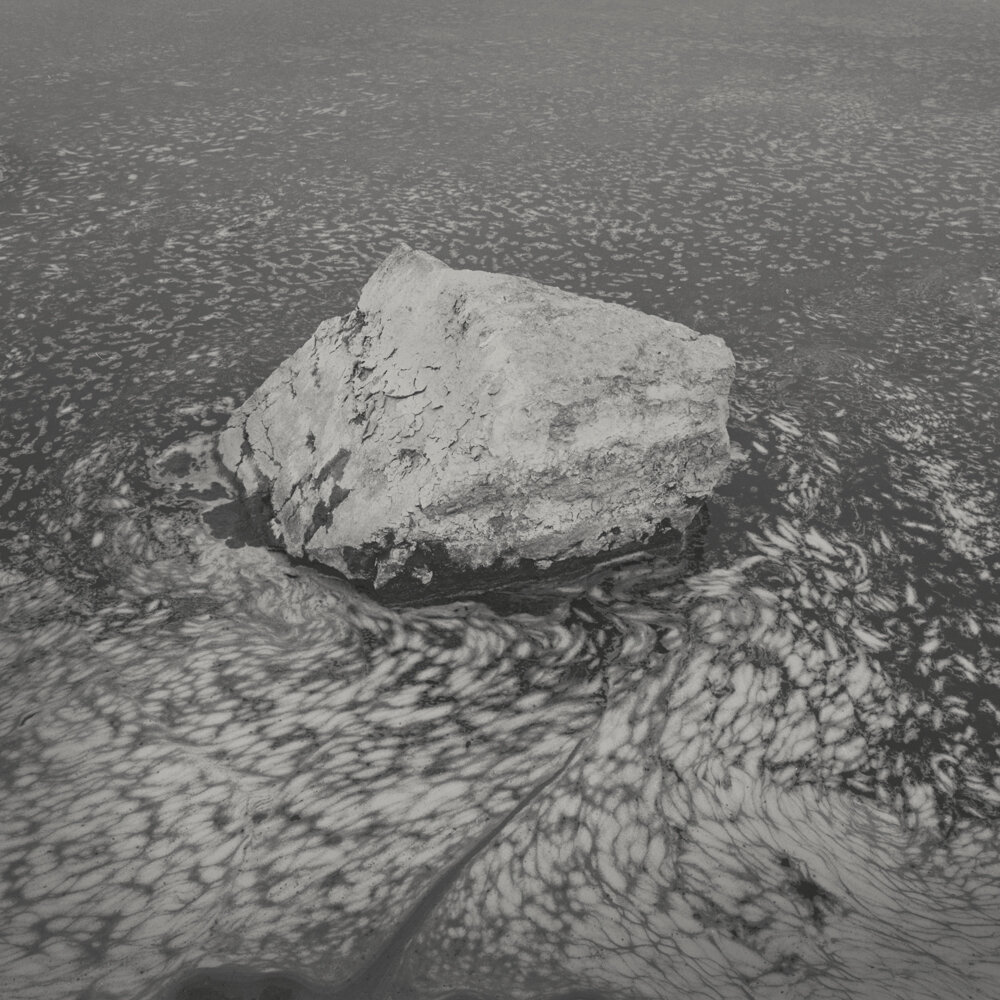
The locations photographed for Odes are situated in what is known as the “Central Plains”—the northern and southern parts of the Yellow River valley—which is the cradle of Chinese civilization. What saddened me most during this project was how old and worn these sites appeared. Unlike the landscapes of the North American Great Plains I had traveled through, every place in the Central Plains bears traces of human activity and transformation. There is not a single piece of nature that has not been altered by human hands, whether it is a mountain, a river, or a field. The land has been cultivated and used for thousands of years and has never had time to recover and rest. Walking through these places, one feels both strong and exhausted. All the photographs that make up Odes were taken in locations mentioned in poems that are 2,500 years old. The people and regimes that governed them have long since disappeared. Yet while photographing, I was often struck by details that reminded me of the connection between history and the present. It could be a fragment of a rampart, a stele, the dried bed of a river frequently mentioned in the Book of Odes, a flower, or a plant… These signs often made me feel that I was not alone, that I was connected to the ancients, because in the end we express similar emotions in response to the things we see. In a wonderful way, words and things met, confirmed one another, and deeply moved me. Perhaps that is what we call “civilization.” Although apparently invisible, it continues to exist. For me, the past has no form—and at the same time, it is everywhere.
DoorZine: In the end, Odes is a collection of images—distant landscapes, rivers, close-ups of vegetation, almost no human presence—unified by their square format and shades of gray. How did you work on the composition of your odes?
The Book of Odes was written during the Spring and Autumn period (771–481/453 BCE). China was then divided into dozens of small and large kingdoms. The book records the folk and official songs of fifteen of them. In composing Odes, I divided these fifteen kingdoms into nine series. In the Book of Odes, the style of the poems from each kingdom is distinctive, due to their geographical and historical differences. That is what I tried to reflect in the nine series.
DoorZine: Your photographs seem frozen in time; traces of modernity are rarely visible. How did you construct images that are inspired by an ancient text from the Bronze Age yet anchored in the present reality of an ultra-urbanized China?
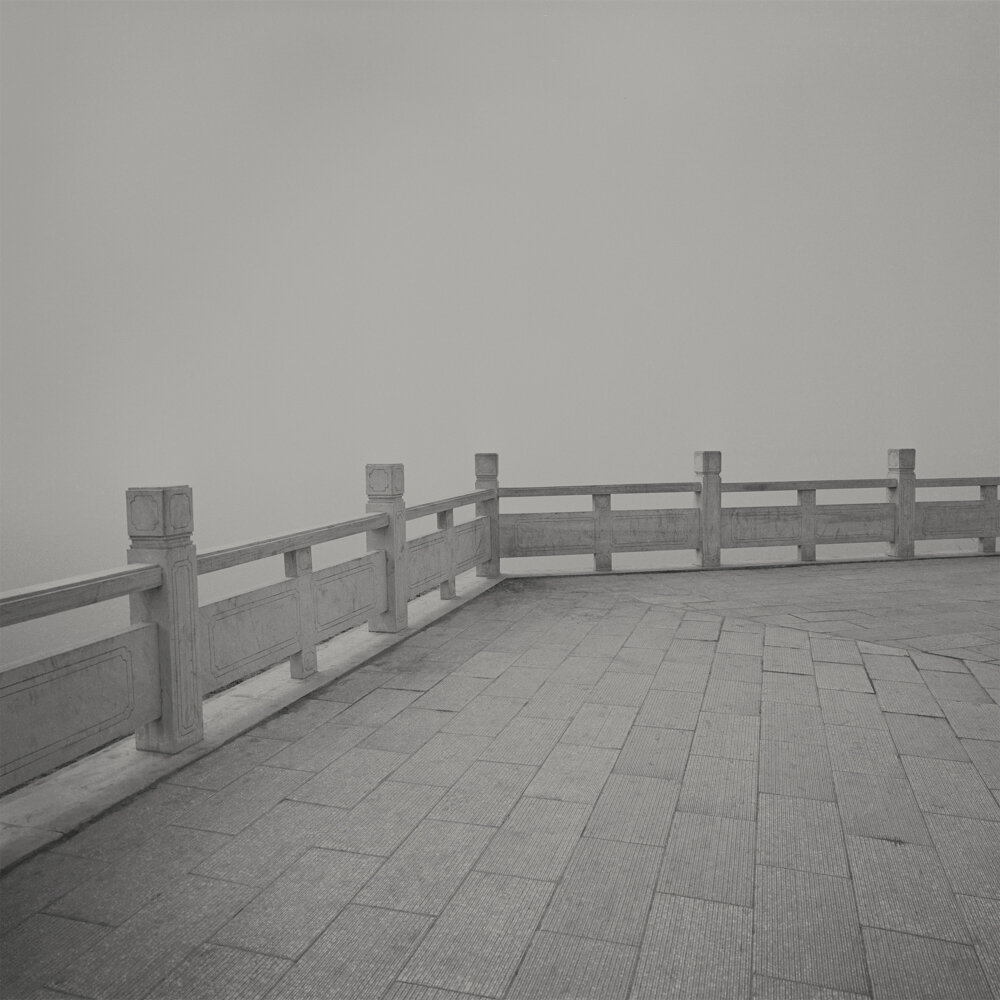
I avoided obvious contrasts and focused on that middle zone, which is also the most difficult when trying to bring out the nuances of a subject. It is like driving at dawn or dusk—the changing light forces the driver to be extremely vigilant to avoid an accident.
Through this simple method, I tried to create—both emotionally and materially—a feeling of inaccessibility combined with attraction.
Because the photographs are small in format and their tones are muted, the viewer is compelled to come closer to appreciate them. Yet even when standing right in front of them, one still feels a strange distance. This psychological distance and physical proximity charge the work with a particular tension, through which I hope to convey a breath filled with silence and a sense of history.
More than one critic has noted that my choice of low-contrast gray tones, and my habit of shooting in cloudy, lightless weather, correspond—deliberately or not—to a certain “sense of time” characteristic of China today. I completely agree. But rather than seeing this as my direct feeling toward our era, I would tend to think of it as the influence of a creator’s unconscious. In the end, one cannot escape one’s time. I often dream of this scene: driving along a deserted Beijing ring road wrapped in thick fog, where the surrounding buildings, barely visible, resemble tombstones receding into the sky.
DoorZine: The exhibition focuses on the theme of the river in contemporary Chinese photography—from an aesthetic point of view (reference to traditional shanshui painting), a historical perspective (human modification of landscapes), and an ecological one (the environmental impact of urbanization). How do you situate your work in relation to this theme?
I think my work can be read historically. The university where I studied in the United States, the Rochester Institute of Technology, was close to the New Topographics movement and to the George Eastman House. Many of my teachers were influenced by this tradition.
The New Topographics movement focuses on landscapes and terrain altered by human activity. I have probably added to that theory my own reflections drawn from classical literary texts—such as the Book of Odes and the paintings and travel journals of Huang Yi in the 18th century*****. I enjoy exploring, through literature, the relationship between landscape and real scenes, a recurring theme in ancient Chinese poetry often referred to as “reminiscence” or “ancient song.”
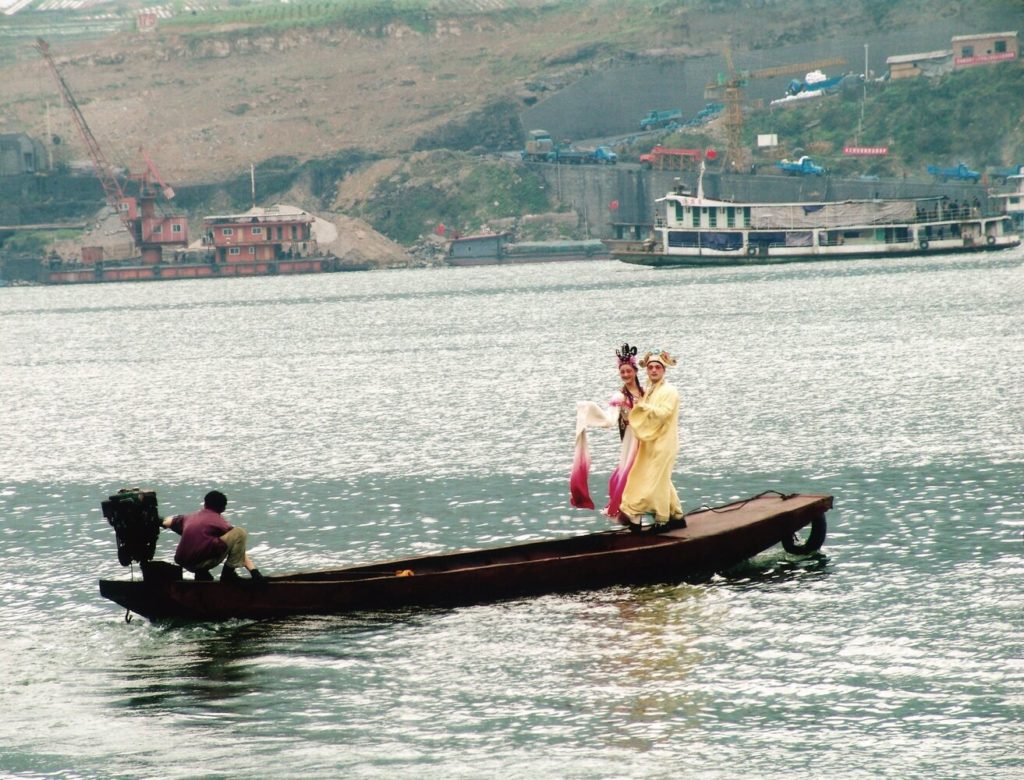
Sui Taca, "Goddess in the River", 2011. From the series “Odes”, 2009-2013. Courtesy of the artist.
Sui Taca, "Goddess in the River", 2011. From the series “Odes”, 2009-2013. Courtesy of the artist.
*The Book of Odes, or Classic of Poetry (Shijing 诗经), is an anonymous anthology of 305 poems dating from the 11th to the 5th centuries BCE, originating in the Central Plains—the kingdoms located in the northern and southern parts of the Yellow River valley. It contains the oldest known examples of Chinese poetry.
**The Elegies of Chu are an anthology of seventeen poems or poetic cycles, half of which originated in the Kingdom of Chu and date from the 4th and 3rd centuries BCE (Warring States period). It includes works by Qu Yuan (c. 343–c. 279 BCE), the earliest known Chinese poet.
***Zhou Zuoren (1885–1967) was a Chinese essayist and the brother of the famous writer Lu Xun. He was one of the main representatives of the “New Culture Movement” of the 1910s and 1920s, which advocated for a modern Chinese culture aligned with Western and international models, particularly democracy and science.
****New Topographics: Photographs of a Man-Altered Landscape was the title of an exhibition organized at the George Eastman House Museum of Photography (Rochester) in 1975. It marked a turning point in documentary photography and in the representation of contemporary landscapes. The exhibition presented eight young American photographers (Robert Adams, Lewis Baltz, Joe Deal, Frank Gohlke, Nicholas Nixon, John Schott, Stephen Shore, and Henry Wessel Jr) and a German photographer couple (Bernd and Hilla Becher).
*****Huang Yi (1744–1801) was a painter and seal engraver of the Qing dynasty (1644–1912). He published travel diaries and albums based on his journeys in search of ancient inscriptions on stone steles, from which he produced valuable rubbings.
Interview conducted by Victoria Jonathan & Bérénice Angremy.
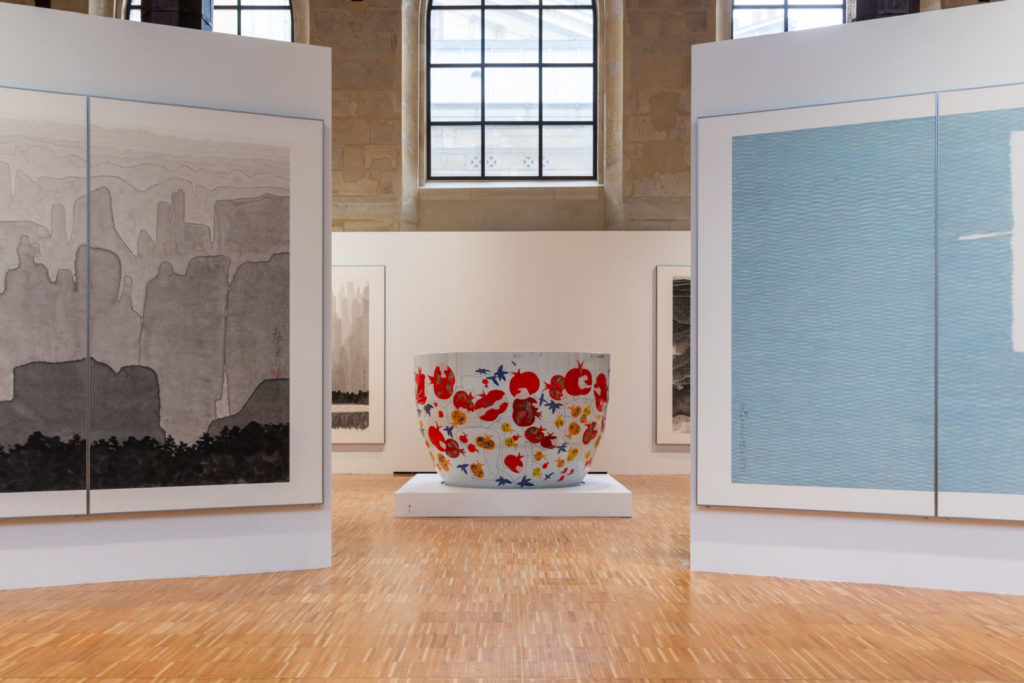
Read the full interview with Taca Sui in the bilingual French–Chinese catalog of the exhibition “Flowing Waters Never Return to the Source,” available for purchase starting July 15, 2020 on the Bandini Books website.
To learn more about Taca Sui’s work: Website:taca.work Instagram : @taca_sui
After years working as a press photographer, Luo Dan traveled across China from east to west, photographing people and landscapes. From 2010 to 2012, he lived in a remote valley in Yunnan within a community whose way of life has remained almost unchanged for a hundred years, and revived a forgotten photographic process: wet plate collodion.
Winner of the National Geographic Picks Global Prize (2008) and the Prix découverte des Rencontres d’Arles (2014), Zhang Kechun photographs the landscapes of contemporary China. He became known for his series The Yellow River, created between 2010 and 2015 around the Yellow River.
artistsYang Yongliang, Sui Taca, Luo Dan, Michael Cherney, Edward Burtynsky, Zhuang Hui, Chen Qiulin, Mu Ge, Liu Ke, Jia Zhangke, Zhang Xiao, Chen Ronghui, Zhang Kechun.
curatorsVictoria Jonathan, Bérénice Angremy
We use cookies on our website to give you the most relevant experience by remembering your preferences and repeat visits. By clicking “Accept All”, you consent to the use of ALL the cookies. However, you may visit "Cookie Settings" to provide a controlled consent.
This website uses cookies to improve your experience while you navigate through the website. Out of these, the cookies that are categorized as necessary are stored on your browser as they are essential for the working of basic functionalities of the website. We also use third-party cookies that help us analyze and understand how you use this website. These cookies will be stored in your browser only with your consent. You also have the option to opt-out of these cookies. But opting out of some of these cookies may affect your browsing experience.
Necessary cookies are absolutely essential for the website to function properly. These cookies ensure basic functionalities and security features of the website, anonymously.
Cookie
Duration
Description
cookielawinfo-checkbox-analytics
11 months
This cookie is set by GDPR Cookie Consent plugin. The cookie is used to store the user consent for the cookies in the category "Analytics".
cookielawinfo-checkbox-functional
11 months
The cookie is set by GDPR cookie consent to record the user consent for the cookies in the category "Functional".
cookielawinfo-checkbox-necessary
11 months
This cookie is set by GDPR Cookie Consent plugin. The cookies is used to store the user consent for the cookies in the category "Necessary".
cookielawinfo-checkbox-others
11 months
This cookie is set by GDPR Cookie Consent plugin. The cookie is used to store the user consent for the cookies in the category "Other.
cookielawinfo-checkbox-performance
11 months
This cookie is set by GDPR Cookie Consent plugin. The cookie is used to store the user consent for the cookies in the category "Performance".
viewed_cookie_policy
11 months
The cookie is set by the GDPR Cookie Consent plugin and is used to store whether or not user has consented to the use of cookies. It does not store any personal data.
Functional cookies help to perform certain functionalities like sharing the content of the website on social media platforms, collect feedbacks, and other third-party features.
Performance cookies are used to understand and analyze the key performance indexes of the website which helps in delivering a better user experience for the visitors.
Analytical cookies are used to understand how visitors interact with the website. These cookies help provide information on metrics the number of visitors, bounce rate, traffic source, etc.
Advertisement cookies are used to provide visitors with relevant ads and marketing campaigns. These cookies track visitors across websites and collect information to provide customized ads.