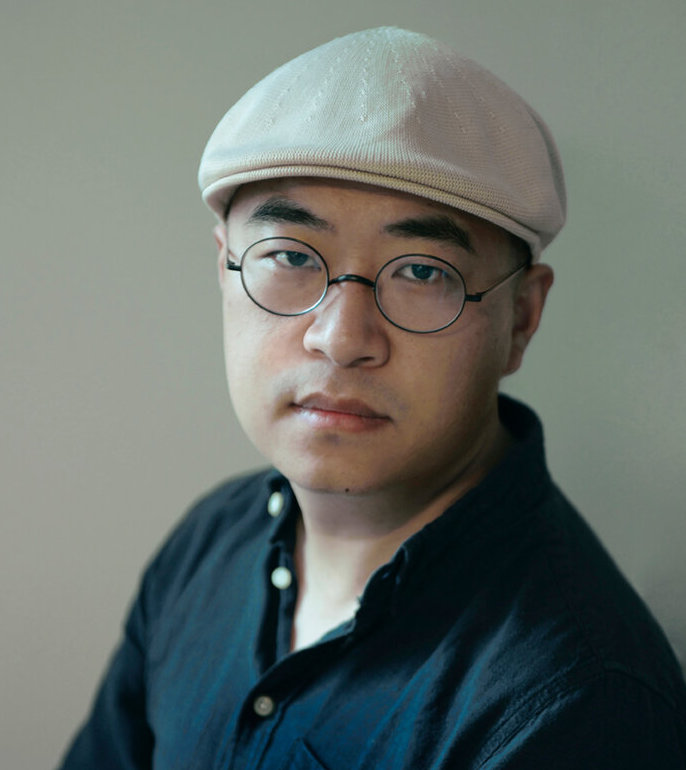
Yang Yongliang: “I cultivate a spirit of continuity with regard to our heritage, but I express a rupture, because rupture is an unavoidable reality of our time.”

Born in 1980 in Shanghai, Yang Yongliang lives between New York and Shanghai. Trained from an early age in calligraphy and traditional ink painting, and a graduate of the Shanghai Academy of Arts in visual communication, Yang Yongliang has, since the beginning of his career, sought to link classical art with contemporary art.

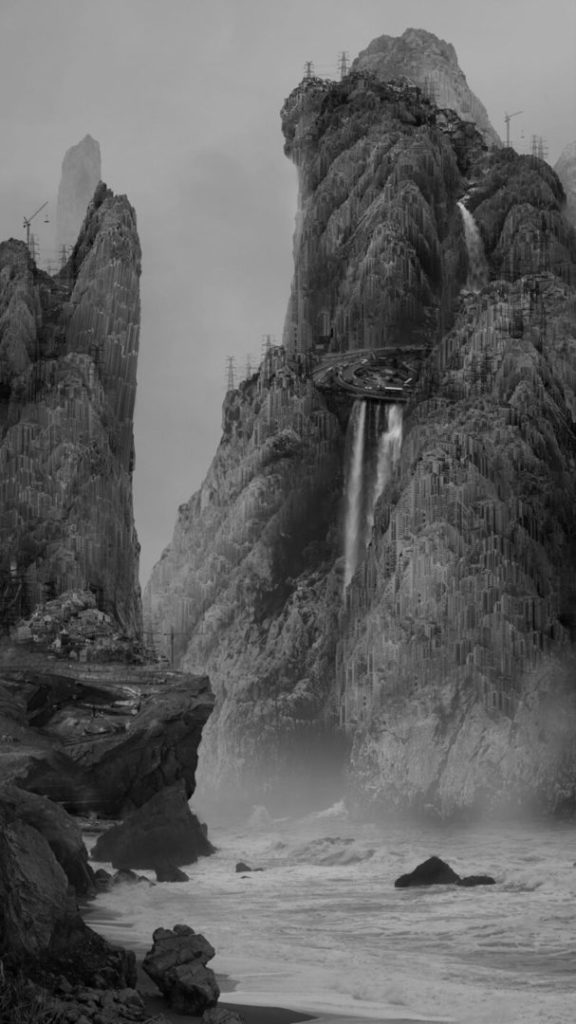
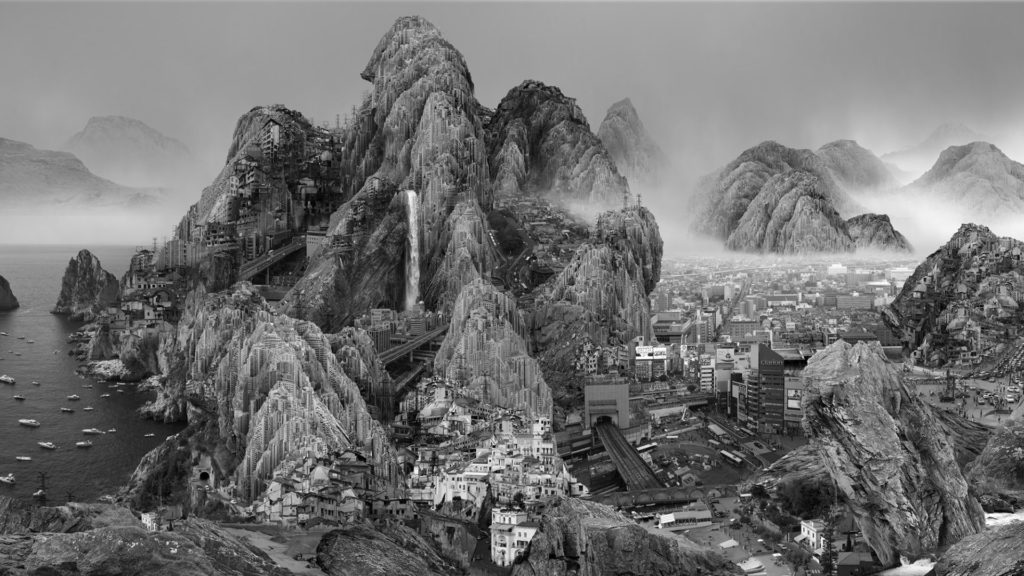
Yang combines photography and new media techniques to construct landscapes that appear natural and evoke traditional shanshui painting (“mountain and water” landscapes), but which in reality depict the effects of urban development in China.

His work has been exhibited in museums and biennials around the world (National Gallery of Victoria in Melbourne, Moscow Biennale, Musée d’Art Moderne de la Ville de Paris, Fukuoka Asian Art Museum, Somerset House in London…). His works have entered the collections of more than twenty international institutions such as the British Museum, the Brooklyn Museum, the Metropolitan Museum of Art in New York, the Museum of Fine Arts Boston, and the San Francisco Asian Art Museum.

Yang Yongliang is one of the artists featured in the exhibition Flowing Waters Never Return to the Source”.

Yang Yongliang, “Artificial Wonderland n°1 [Pays des merveilles artificiel n°1]”, 2010. De la série Artificial Wonderland. Avec l’ autorisation de l’artiste et de la Galerie Paris-Beijing.

DoorZine: Your work, begun in the mid-2000s, evokes in a poetic yet direct and critical way the drastic transformations of the landscape in China. At first glance harmonious, your images reveal mountains that are ultimately quite unsettling, made up of countless buildings whose construction seems like it will never end. What are you trying to express by opposing nature and the city in this way?

Yang Yongliang: One can often find several lines of contrast in my work: the rapid development of urbanization and destruction of the environment; the influence of globalization and the gradual decline of local cultures and traditions; the rapid growth of mass culture and a deep but unmet need for spirituality.

DoorZine: Your work combines photography and new media to construct landscapes that appear natural and recall traditional Chinese shanshui painting (mountain and water), but which in reality describe the effects of urban development in China. Your images visually evoke traditional ink painting yet are composed through the assembly of photographs or videos using computer software. Could you tell us about your creative process?

My creative process is not particularly original. I use the possibilities offered by digital photography. The photographed or filmed material is processed with computer software that allows it to be recomposed in order to imitate the structure of a shanshui painting, creating a new experience and a new way of seeing. My work also has a documentary dimension.

 The-Waves-Yang-Yongliang-2019

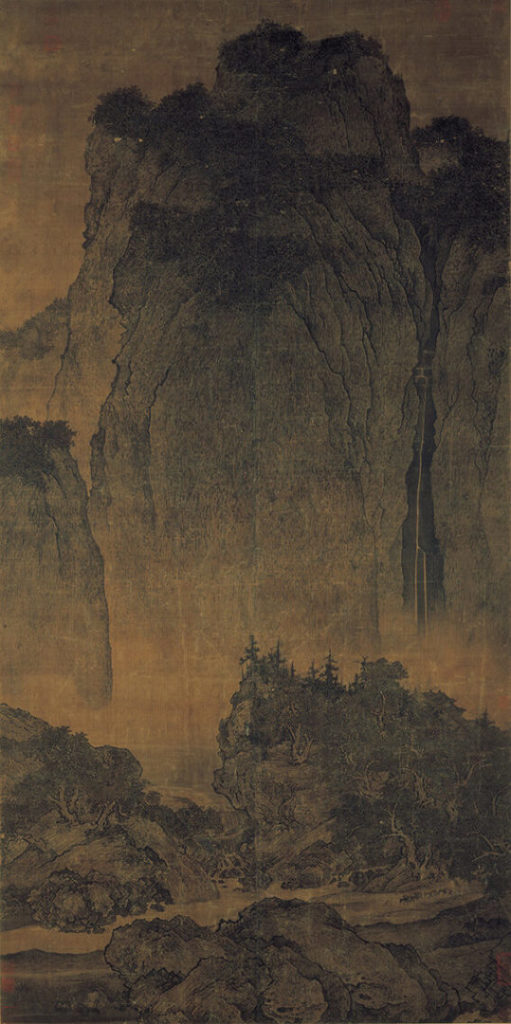
 Yang-yongliang-Fan-Kuan

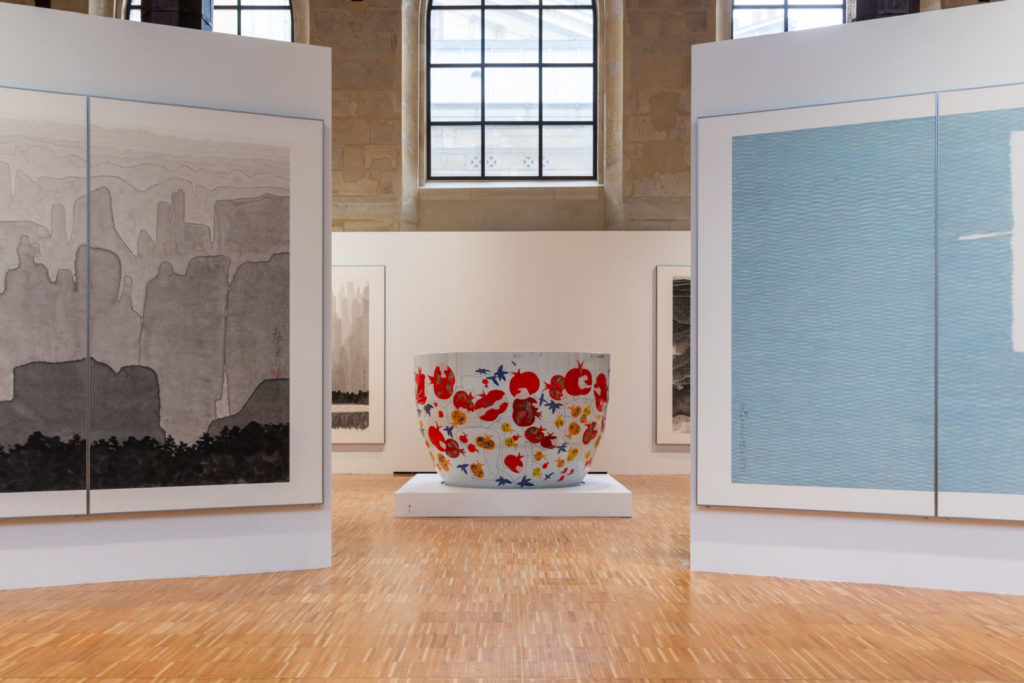
DoorZine :What place does the pictorial tradition of the Northern Song hold in your sources of inspiration? Do you work from particular classical works or painters (one thinks for example of Qu Ding, Xu Daoning, Fan Kuan, or Ma Yuan), notably in the four works shown at Jumièges (Artificial Wonderland No. 1, The Waves, Enjoyment of the Moonlight)?

It is difficult for me to precisely characterize my own work, because my works are inspired in part by the Classics, and at the same time they are very radical in their use of new media techniques to create new ways of seeing. It is true that shanshui paintings of the Song and Yuan dynasties inspire me: for example, I think of works such as Wind Whispering Through Pines in the Mountains (1124, National Palace Museum, Taipei) or Intimate Landscape of River and Mountains (National Palace Museum, Taipei) by Li Tang (Song dynasty), Travelers Among Mountains and Streams (c. 1000, National Palace Museum, Taipei) by Fan Kuan (Northern Song), and Early Spring (1072) by Guo Xi (Northern Song).

Doorzine: With you, photography, video, and computer software have replaced ink, brush, and paper. Is your approach a continuation or a rupture with traditional painting? Do you consider yourself a “literatus” of modern times?

I cultivate a spirit of continuity with regard to our heritage, but I express a rupture, because rupture is an unavoidable reality of our time. However, I always hope to find within rupture an indication that culture has not been completely lost. I would not dare to call myself a “literatus,” because in ancient times, literati represented the highest degree of achievement a person could reach in the cultural domain.

Yang Yongliang, “Endless Streams”, 2017. Single Channel 4K video, 7’00”, © Yang Yongliang / Courtesy Galerie Paris-Beijing

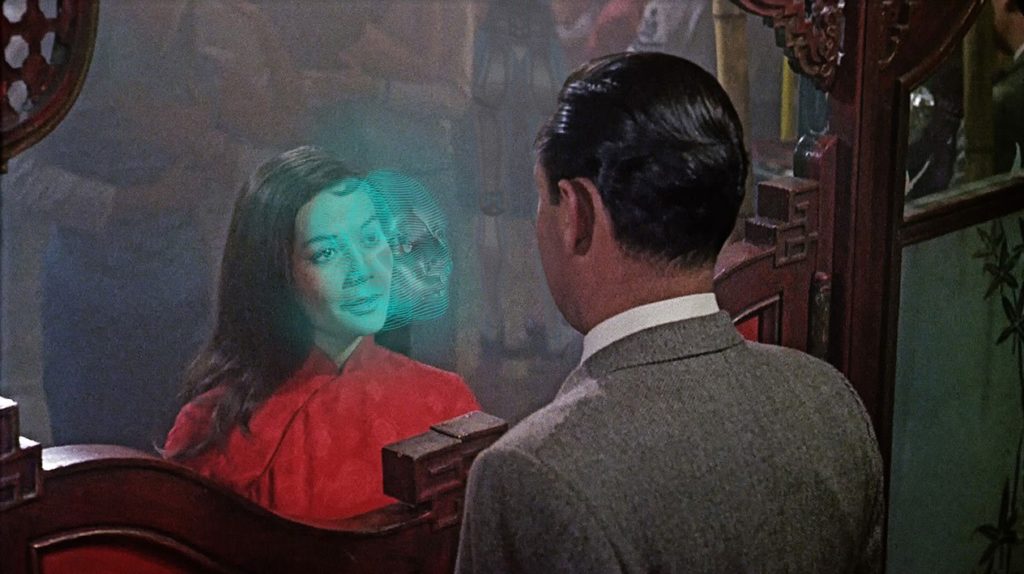
DoorZine: In Enjoyment of the Moonlight and the The Peach Blossom Colony series, you refer to classical Chinese literature, specifically to the prose work by the scholar Tao Yuanming (365–427), The Peach Blossom Spring, a famous text expressing the criticism of scholars toward society and their ideal of retreat. Why this reference?

The Peach Blossom Spring is a travel narrative. Although not very long, it holds great importance for the Chinese spiritual world. I believe that some of its images continue to feel vivid today. The imagination of this utopian poetry is reflected in the spiritual universe of ancient Chinese scholars and their desire to escape the world. This central idea remains at the heart of my work. In this series, I have added a narrative element to reinterpret this question in a completely new way.

Interview conducted by Victoria Jonathan & Bérénice Angremy.

Read the full interview with Yang Yongliang in the bilingual French–Chinese catalog of the exhibition “Flowing Waters Never Return to the Source,” available for purchase starting July 15, 2020 on the Bandini Books website.

To learn more about Yang Yongliang’s work:
Website:
www.yangyongliang.com

Instagram : @yangyongliang

Yang Yongliang is represented by Galerie Paris-Beijing.

Related DoorZine Articles
Aged between 22 and 38, the ten nominees of the Jimei x Arles Discovery Award 2018 are a mirror on today's China, with their focus on topics including the couple, intimacy, gender identities, self-representation, collective memory, public and private urban space, media and social networks, mass production and consumption, globalized exchanges...
Related Projects

Newsletter

Subscribe to our newsletter – get your foot in the door!