Zhang Kechun: “It was a form of emotional catharsis.”

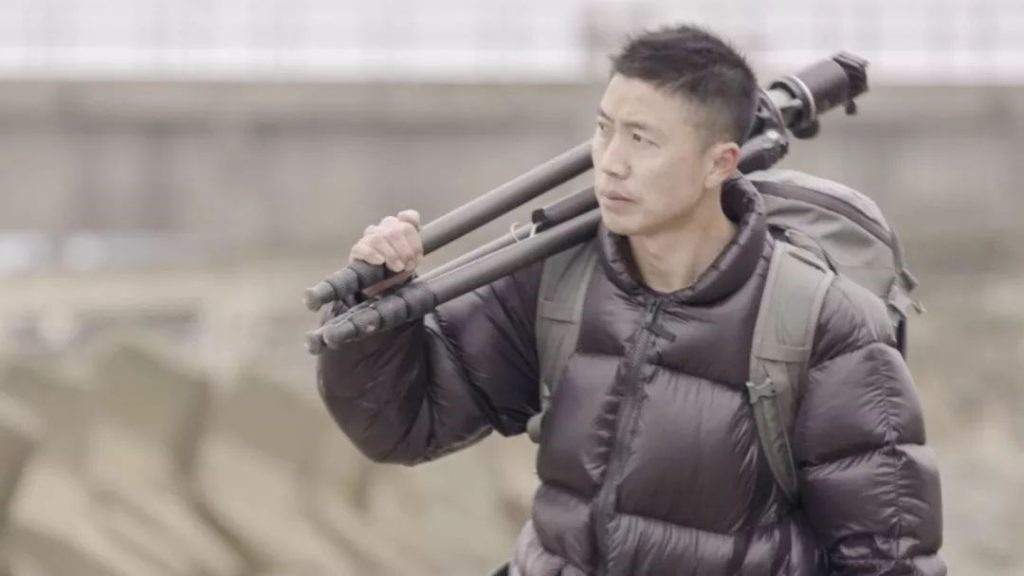
Zhang Kechun was born in 1980 in Bazhong, Sichuan Province, and lives in Chengdu. He photographs the landscapes of contemporary China and gained recognition with his series The Yellow River, produced between 2010 and 2015 along the Yellow River.

He is the recipient of the National Geographic Picks Global Prize (2008) and the Discovery Award at the Rencontres d’Arles (2014). He has taken part in numerous exhibitions in China (CAFAM, Beijing Photo Biennale) and abroad (Photoquai, Rencontres d’Arles). His works have entered the collections of institutions such as the German National Museum, the Baltimore Museum of Art, the Central Academy of Fine Arts Museum, the Williams University Museum of Art, and the Schneider Foundation.

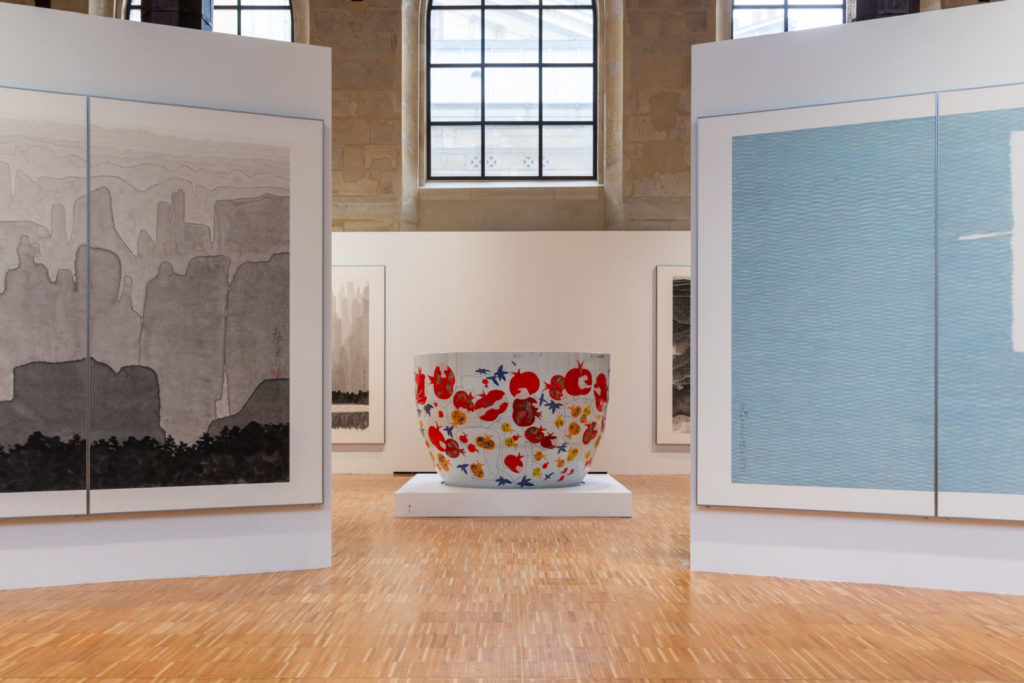
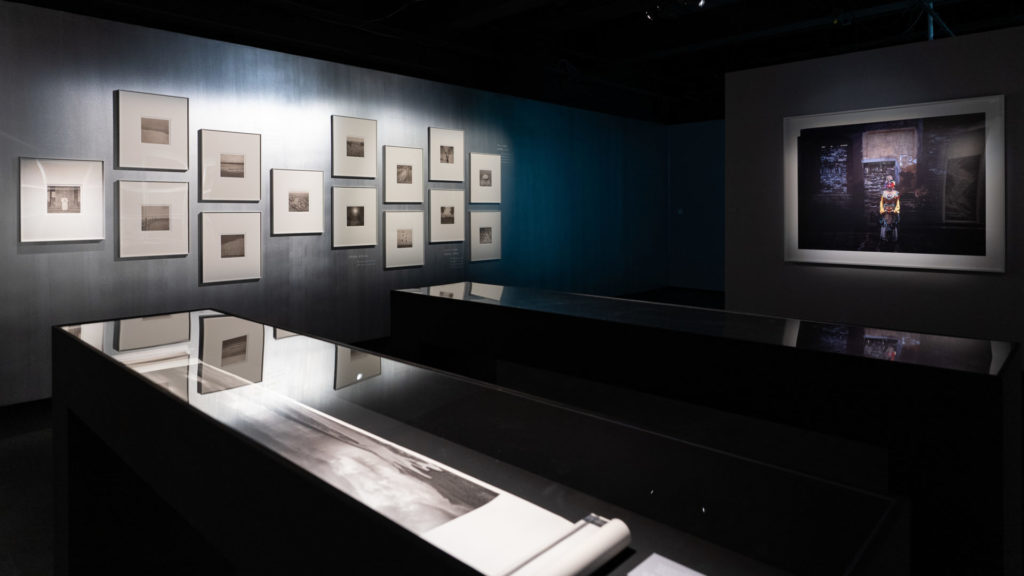
Zhang Kechun is one of the artists featured in the exhibition Flowing Waters Never Return to the Source”.
DoorZine: It was after reading Zhang Chengzhi’s 1984 novel North River that you decided to follow the Yellow River—cycling from the Shandong coast to the mountains of Qinghai—for nearly four years. Can we say that this journey, during which you produced the series The Yellow River (2010–2015), was a kind of rite of passage?

Zhang Kechun: I truly began working on The Yellow River in 2010. Before that, I had already started wandering along the Min River, where I live, taking photographs. At the time, it was a form of emotional catharsis—a way to connect with the outside world. Of course, during my early shoots, I kept challenging my initial ideas, trying to build a new structure. Gradually, I found what I wanted to express. I was in my early twenties when I read North River, and like the protagonist, I wanted to do something meaningful with my life. I also wanted to look for the scenes and places described in the novel.

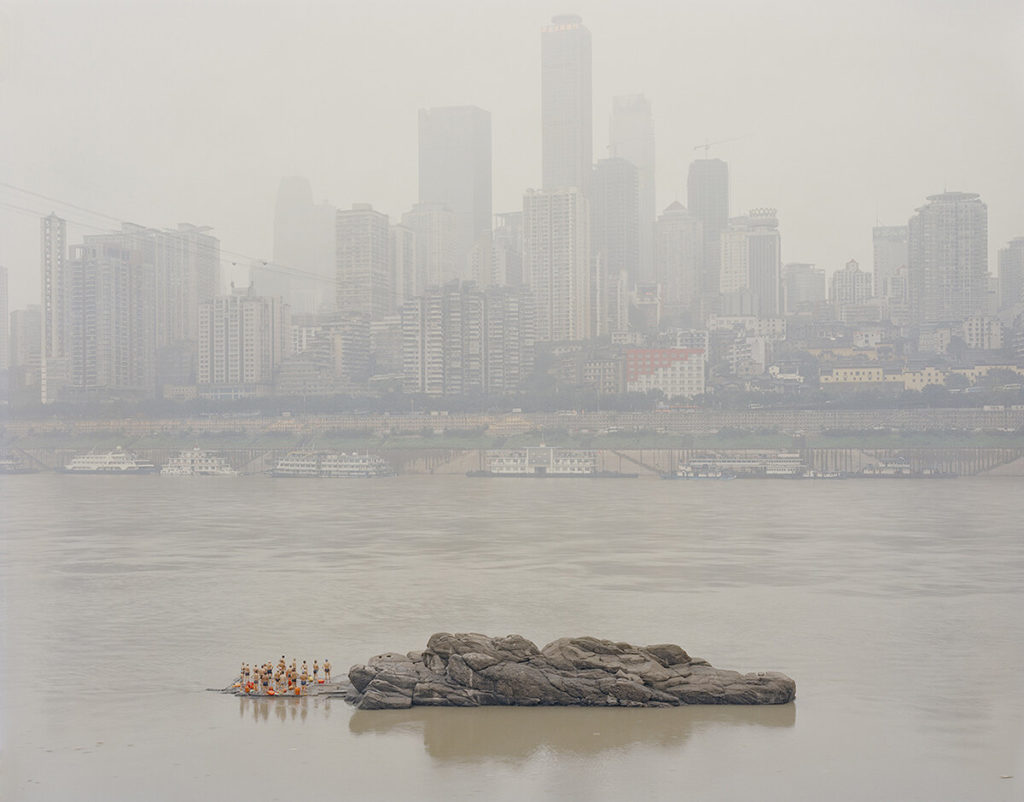
Zhang Kechun, “On the Rock in the Middle of the River” (2014), from the series Between the Mountains and Water (2014). Courtesy of the artist.

DoorZine: There are always people or traces of human activity in your photographs (ruins, construction debris, electric poles), even though the landscape dominates. What does the relationship between humans and nature mean to you?

In general, I’m interested in landscapes altered by humans. People have always played a role in the landscape—everything that happens within it is the result of human activity. Looking at the facts alone, human activity has already had a profound impact on nature, an impact felt in both cities and rural areas. In recent years, I’ve explored many of these places in depth, and this impression has only grown stronger.

DoorZine: As a child, you began by studying traditional painting, which gives great importance to landscape representation. What did this training bring to your photographic approach to nature?

During my studies, I learned Western painting, since university entrance exams required mastery of three components: observational sketching, color work, and drawing. Learning to paint is always useful for photography, though it sometimes limits my shots as well.

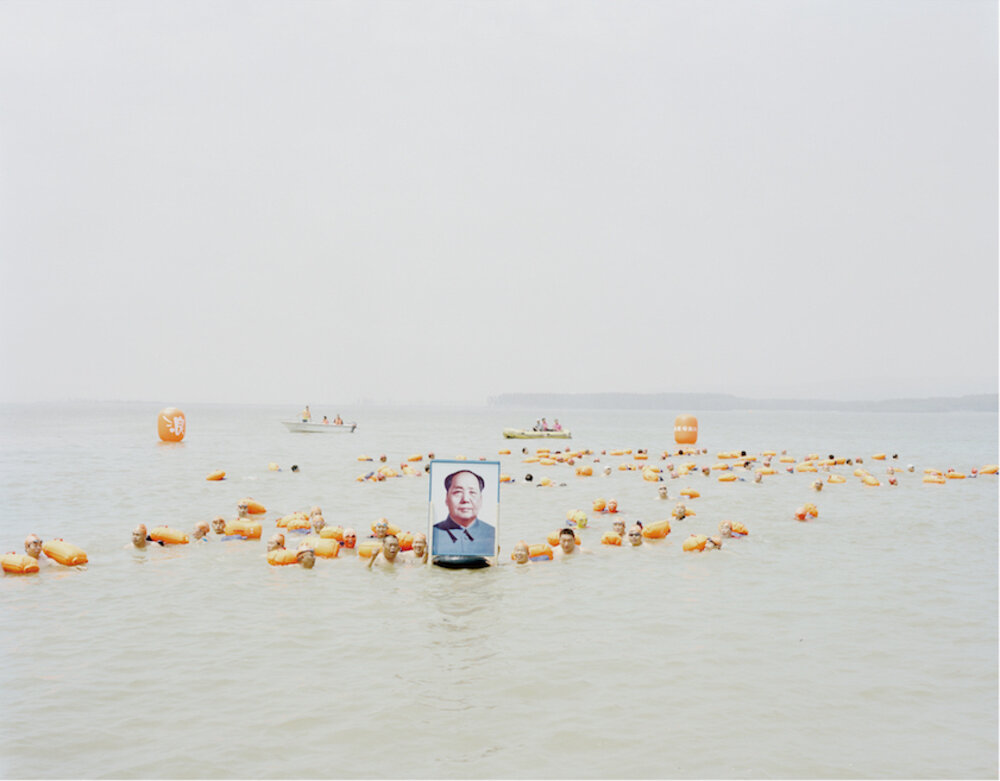
Zhang Kechun, “People Crossing the Yellow River with a Photo of Mao Zedong, Henan”, 2012, from the series “The Yellow River” (2010-2015). Courtesy of the artist.

DoorZine: Your landscapes are shrouded in a ghostly atmosphere, with very white skies and dusty grounds, from which objects and people seem to appear in unreal, fleeting ways. Why this treatment of the image?

My initial intention was to soften the tension within the images—to mute the colors and bring the background and foreground closer together, much like in traditional painting. Perhaps it also simply reflects my personal taste.

DoorZine: Why did you extend your exploration of landscape with Between the Mountains and Water, and how are the two series connected? 

With The Yellow River, I traveled across China along the Yellow River. Once I finished that project, I wanted to explore new territories. I marked points on a map and set off with my camera. I changed subjects.

DoorZine: How much does chance play a role in your creative process? Are your photographs staged? How do you compose them? One thinks, for instance, of works such as The Yellow River: Swimmers Crossing the Yellow River with a Portrait of Mao Zedong, Henan, 2012, or The Yellow River: Fishermen by the River, Shaanxi, 2012.

These scenes happened in real life! The swimmers crossing the Yellow River with a portrait of Mao—that’s an annual celebration. I learned about it in the news, and the following year I decided to travel there to photograph the event. But because my photo equipment was too cumbersome, I wasn’t able to capture the images I wanted. So I waited another year and returned again.

Interview conducted by Victoria Jonathan & Bérénice Angremy.

Read the full interview with Zhang Kechun in the bilingual French–Chinese catalog of the exhibition Flowing Waters Never Return to the Source available for purchase starting July 15, 2020 on the Bandini Books website.

Related DoorZine Articles
Related Projects

Newsletter

Subscribe to our newsletter – get your foot in the door!